
|
|
|
Alexis de Chateauneuf. Architectura Domestica. — London, Paris, Hamburg, 1839 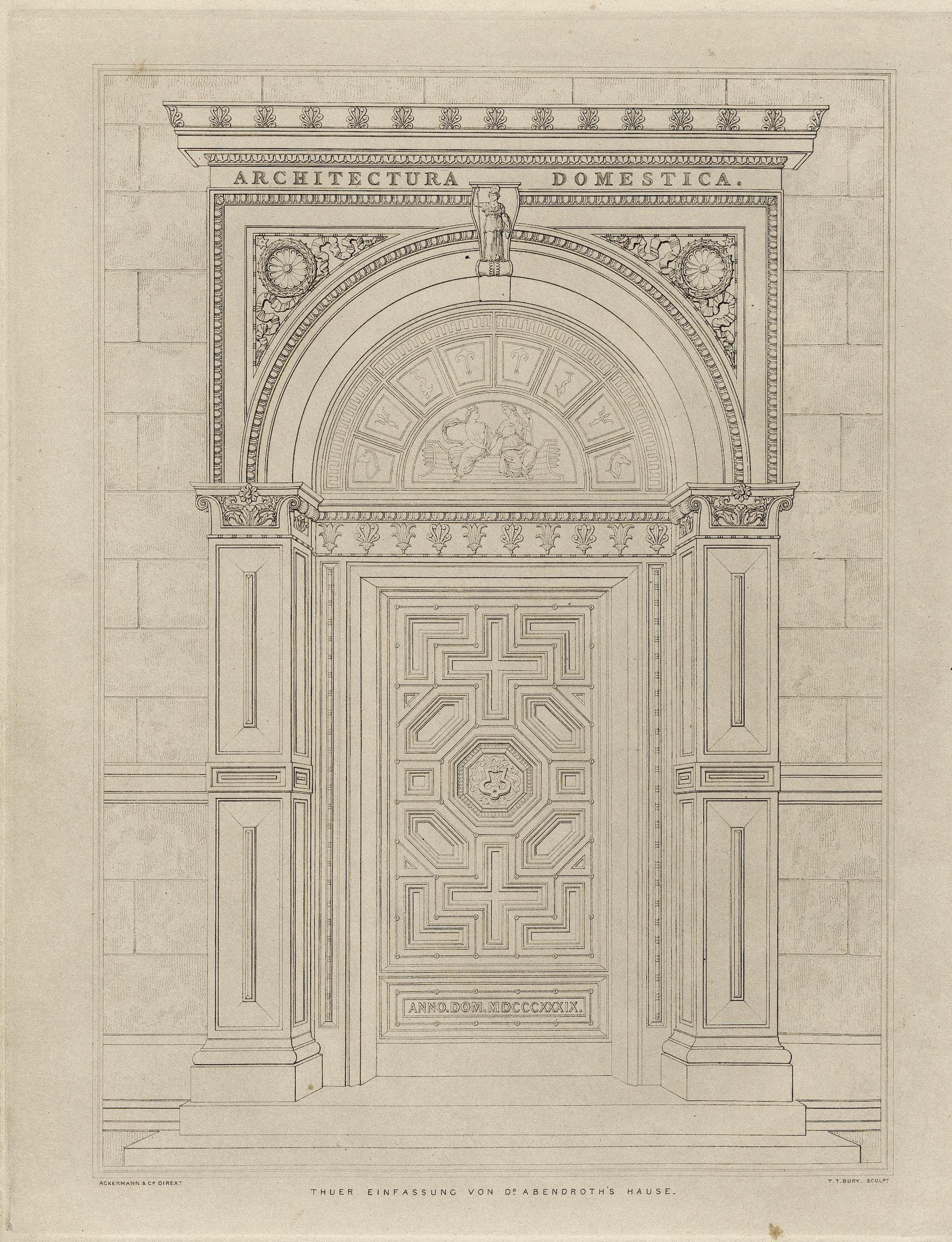 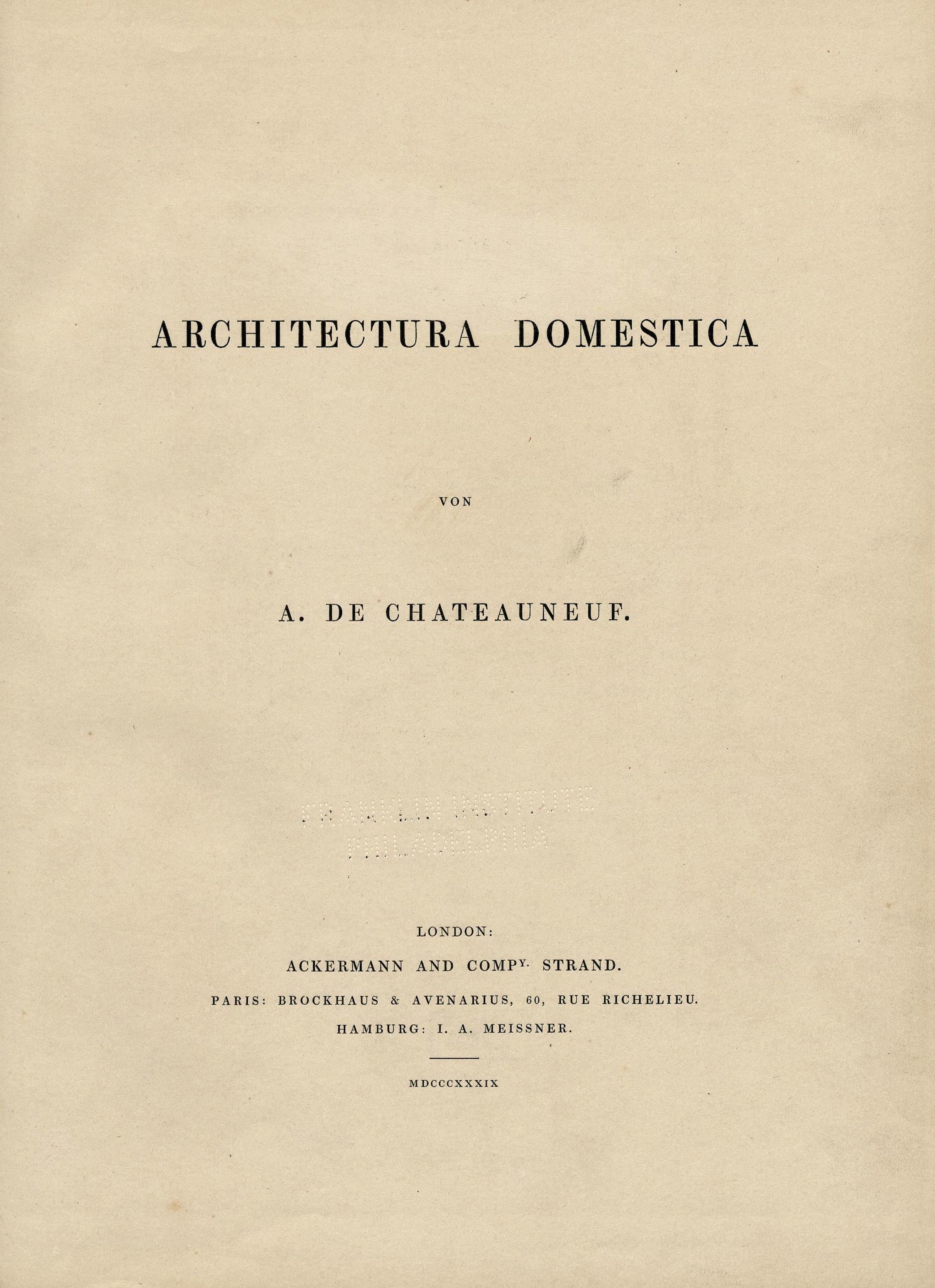 Architectura Domestica / von A. de Chateauneuf. — London : Ackermann & Co. ; Paris : Brockhaus & Avenarius ; Hamburg : I. A. Meissner, 1839. — 7 p., XVIII pl.
This illustrated volume, Architectura Domestica, published in 1839, presents a series of architectural designs and executed projects by A. de Chateauneuf. The work focuses primarily on domestic and ancillary structures in Northern Germany, notably around Hamburg and Lübeck.
Through detailed plates and accompanying explanations, the book showcases a variety of building types, including gardeners' cottages, orangeries, stables, transformed agricultural buildings, suburban villas, and a major urban residence. The descriptions emphasize the adaptation of design to specific sites, practical requirements, and the tastes of patrons. A recurring theme is the integration of these structures with their gardens and landscapes.
Significantly, the annotations highlight the architect's active collaboration with painters and sculptors for interior and exterior decoration, featuring artists such as Erwin Speckter and Julius Milde. The work also provides insight into contemporary construction materials, costs, and the influence of Italian Renaissance and Venetian architectural models.
While several of the ambitious designs for the Hamburg Jungfernstieg remained unexecuted, the album stands as a detailed record of early 19th-century architectural practice, patronage, and the pursuit of combining functional design with artistic ornamentation.
ARCHITECTURE DOMESTICA
PLATE I.
In the Park at Ham, the seat of Charles Sieveking, Esq., Syndic of the city of Hamburg, there is a rising path, leading, between orchards and flower-gardens, to an eminence, which was judged to he a suitable spot for a seat which should command a fine prospect. This spot, being in the middle of the grounds, was a very convenient site for the gardener’s cottage; and this was the origin of this small habitation, with its shady seats, behind a neat lattice, which has a very good effect as a convenient place for hanging up plants in seed to dry, and serves to support the projecting roof.
The second cottage in this Plate, in the Park of Caesar Godefroy, Esq., at Dockenhuden, likewise serves as a gardener’s cottage for a larger family.
PLATE II.
In the garden of Dr. Buchholtz, Syndic, near Lubeck, which declines rapidly towards the river, the gardener’s lodge was to be united to the stable. The architect was obliged to employ the materials of a wooden house, which was pulled down, and which is the reason of its being faced with boards.
In the garden of A. de Chapeaurouge, Esq., at Harvestehude, the orangery, stable, gardener’s lodge, and poultry-yard were to be combined. The height requisite for the first, afforded room for a hay-loft over the stable, and even for a second story to the gardener’s cottage.
As I endeavoured to characterize these little buildings by simple forms which accidentally presented themselves, I willingly leave it to the dilettanti in our profession, mainly to keep in view in such conceptions the distinct type of national farm-houses, by which, in the most fortunate cases, some agreeable fancies may be brought into play.
PLATE III.
The dwelling-house, in Ham Park, the ground-floor of which was divided into several small apartments, had to be totally altered, as, besides other changes, a spacious saloon was especially required; which gave rise to the annexed ground plan. In this saloon the owner, who had a great predilection for the arts in the time of Pericles, wished to have the frieze of Phigalia painted. In order to avoid, in this painted copy of sculpture, the cross shadows which cause confusion, I ordered a dark brownish red colour for the ground of the figures in relief. Though in this manner the frieze appears sufficiently light, this representation required an equally bold modelling of the walls. The pilasters, supporting the dark coloured vases, which harmonize with the frieze, contribute to attain this object.
The little Cabinet, the painting of the ceiling of which is here given, is of much less height than the other apartments; the walls are wainscoted with polished light-coloured wood, on which flying vignette figures, and, in the lower panels, even landscapes, are painted. My friend Erwin Speckter, whose premature death is so great a loss to the art, has, by his genius, rendered this little apartment a most delightful retreat. I do not envy any of my colleagues, who, without the help of the sister arts, would owe his triumphs only to the rigid elements of his own.
The other apartments of this house contain a choice collection of paintings of the old Dutch and Flemish Schools.
PLATE IV.
Represents the detail of the veranda of the same house, which serves to cover the entrance, for a seat, and for leading to the issue of the garden in another direction.
The stable is adorned in the front with some figures, which, instead of the education of the horse, here indicated, represent the history of the children of Heymon, by Julius Milde, an artist now residing in Lubeck.
The part of a building for distilling brandy from potatoes, which was visible in the Park, required some ornament, for which the blossom, leaves, and even the bulbs of the potato, in terra cotta, are employed.
PLATE V.
The extensive ground-floor of a Holstein barn, with the adjoining cowhouses, being no longer required for agricultural purposes, in consequence of some alterations, was to be converted into a saloon with apartments adjoining. The building as it stood suggested the accompanying wood ornaments, with views of landscape scenery between. The execution of the plan was given up.
PLATE VI.
The want of symmetry in the country-house of the Syndic, Dr. Buchholtz, near Lubeck, was a necessary consequence, partly of the great inequality of the ground, and partly of the wish to give to as many apartments as possible the advantage of the fine prospect of the various windings of the beautiful river.
The bow-windowed room serves for a diningroom; the large saloon, which is three feet higher than the other apartments, is used as the sitting-room by a numerous family. It is adorned with valuable pictures by modern masters.
PLATES VII. and VIII.
The Jungfemstieg in Hamburg, on the basin of the Alster, forms a flat quay, not unlike those of Venice. This situation induced me, in the accompanying plans, to imitate the peculiar architecture of that city.
In Plate VII. it will be perceived that the first fajade but slightly tends to that direction, whereas the greater façade, in the next Plate, more decidedly follows the models.
In the second plan, Plate VIII., the steep declivity from the Geest to the Marsh in the suburb of St. George, gave occasion to the little garden façade.
Unfortunately these three designs have not been carried into execution.
PLATE IX.
This plan too has not been executed.
PLATE X.
The vault of the family of Mr. Sieveking, in the Churchyard at Ham, is of granite. The sculpture of the bronzed doors, representing the Angel at the tomb of our Lord, is by the well-known sculptor, von Launitz, at Frankfort on the Maine.
The monument of the family of Nölting, in the new Churchyard, near Lubeck, is of sandstone, with slabs of black marble.
PLATES XI. to XVIII. and the TITLE-PAGE.
The house of Dr. Augustus Abendroth was begun in 1832, and ready for the reception of the family in 1836. It forms the comer of a side street of the New Jungfernstieg at Hamburg, and is overlooked from the other, much more distant, and in parts much higher, banks of the Alster. It was, therefore, requisite to take care that the mass of the building should not be kept down by smaller neighbouring houses. To effect this I adopted the mode often occurring in the palaces of Florence, namely, to make the roof to decline towards the back, which was the more appropriate here, because the irregularity of the foundation did not admit of giving any pleasing lines to the roof.
The arrangement of this house as the residence of a wealthy family, which, on occasion of great festivities, desires to display a noble magnificence, will be easily understood by the plans, sections, and details.
I may consider myself fortunate, that I was allowed to choose better materials than usual, and even to give occasion for the application of sculpture and painting in the decoration of the apartments.
On the outside, all the mouldings and members are of sandstone, from tbe quarries at Pirna; inside, the steps and the banisters of the principal staircase are of marble, executed at Carara. It is remarkable that the wrought marble, including the freight by sea, did not exceed the cost of the wrought sandstone in the German lowlands, together with the water carriage from the Upper Elbe. May this example be imitated! I was led to make this, the first trial in our country, by the frequent employment of marble, in former times, in Amsterdam. Perhaps the quarries of the Penthelicon, freed from barbarous neglect, may, if there is a sufficient demand, furnish marble at a cheaper rate. In this case, we shall be able to make use of this more beautiful and durable material for architectural purposes.
The great saloon is adorned with casts of Thorwaldsen’s frieze of the triumphal entry of Alexander into Babylon; the more valuable, because the greater part of the casts were taken from the clay models of the master.
The colossal busts of Divinities in the niches on the staircase are the work of Mr. Siegel. The images of the planets and fixed stars of the painted glass covering, are from designs of Erwin Speckter. The comer cabinet of the principal story is decorated with arabesques, after designs by the same Master, painted in encaustic by Mr. Milde. Unhappily it was too difficult to represent such sportive fancies in their forms and colours in these outline plates.
In the semicircular saloon, represented in Plate XVIII., all the panels between the pilasters, the supports and the wall between the windows, were to he adorned with frescoes. Erwin Speckter, whose health was already much enfeebled, courageously undertook the work, to the practice of which he had not yet been accustomed. The picture between the windows, the Graces delivering Pegasus to Minerva, was entirely finished by him: nor has the minutest part of it been improved. Judges of the fine arts admire, with astonishment, the sublimity of the conceptions, and the richness of the harmonious colouring. He began one of the pictures of the supports, representing Cupid and the Graces, when the feeble body refused its service to the dictates of the mind.
There are still two cartoons for this work: Cupid, who appears to interrupt the Parcæ in their work, by playing on his lute, and the contest between Minerva and Cupid, before the judgment-seat of the Muses.
The corner cabinet in the third story is adorned, with pleasing scenes of ordinary life in Italy, painted in encaustic by Louis Asher.
In the other apartments of the house there is a choice collection of paintings and sculpture by modern masters.
Plates I–XVIII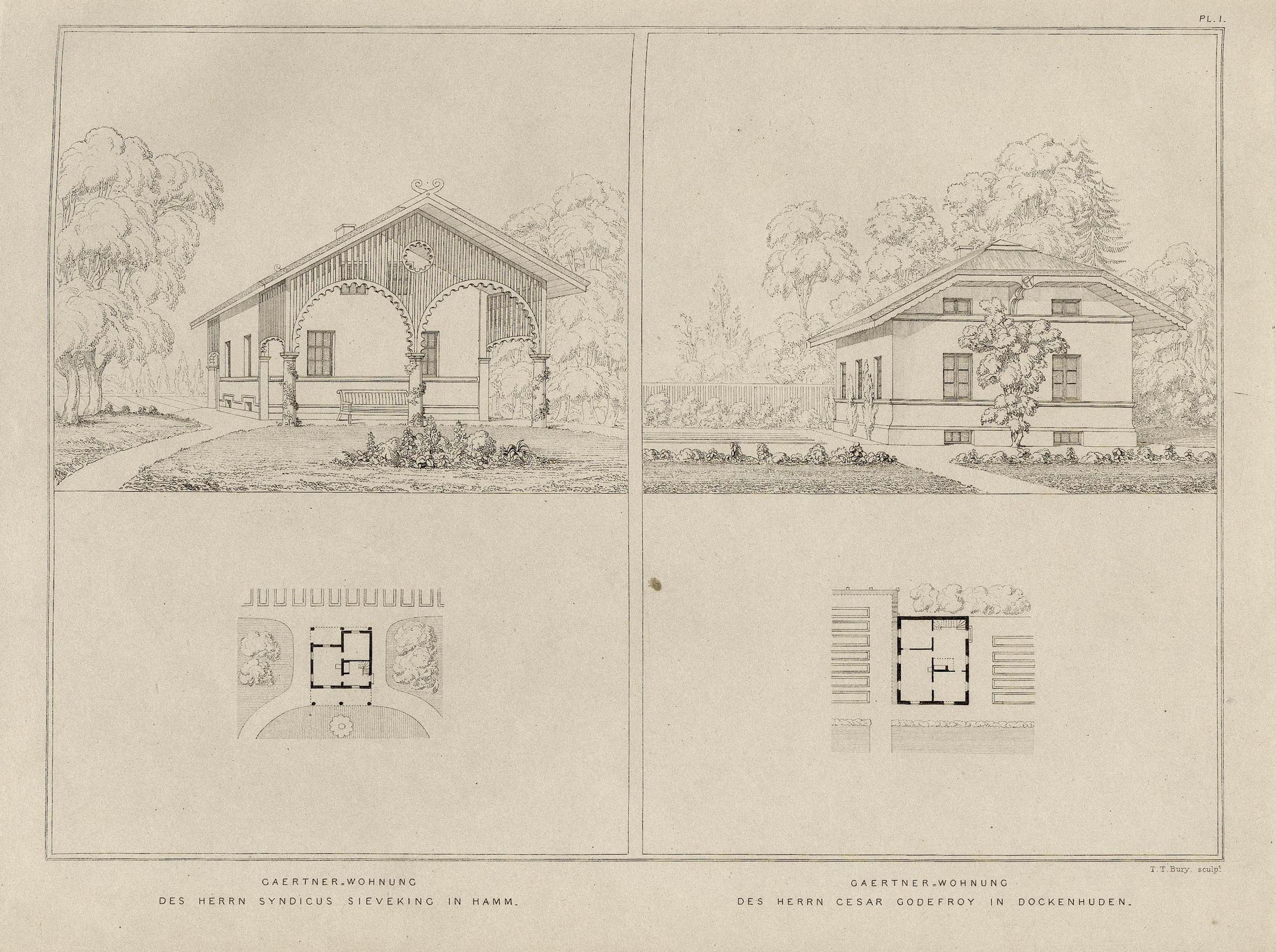 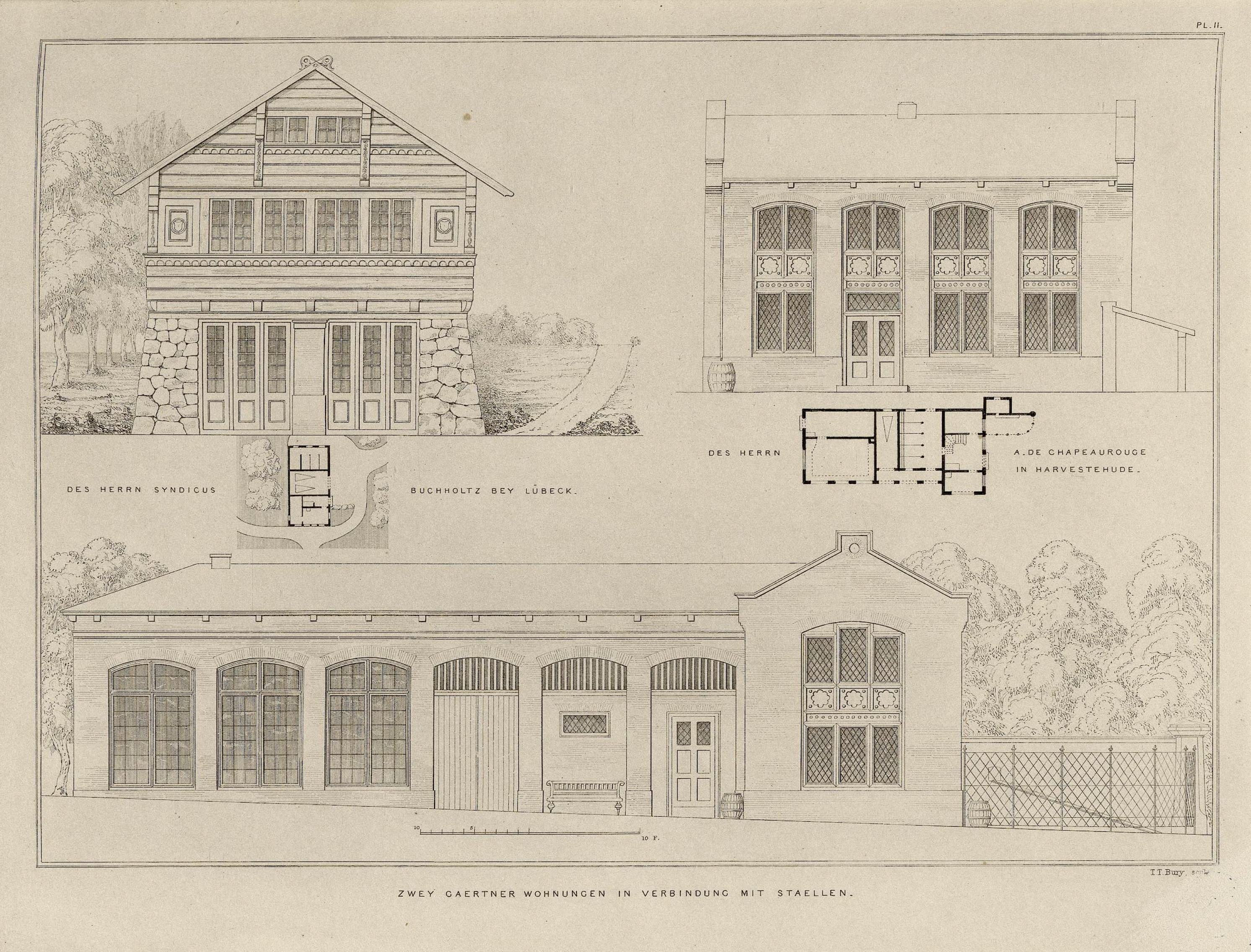 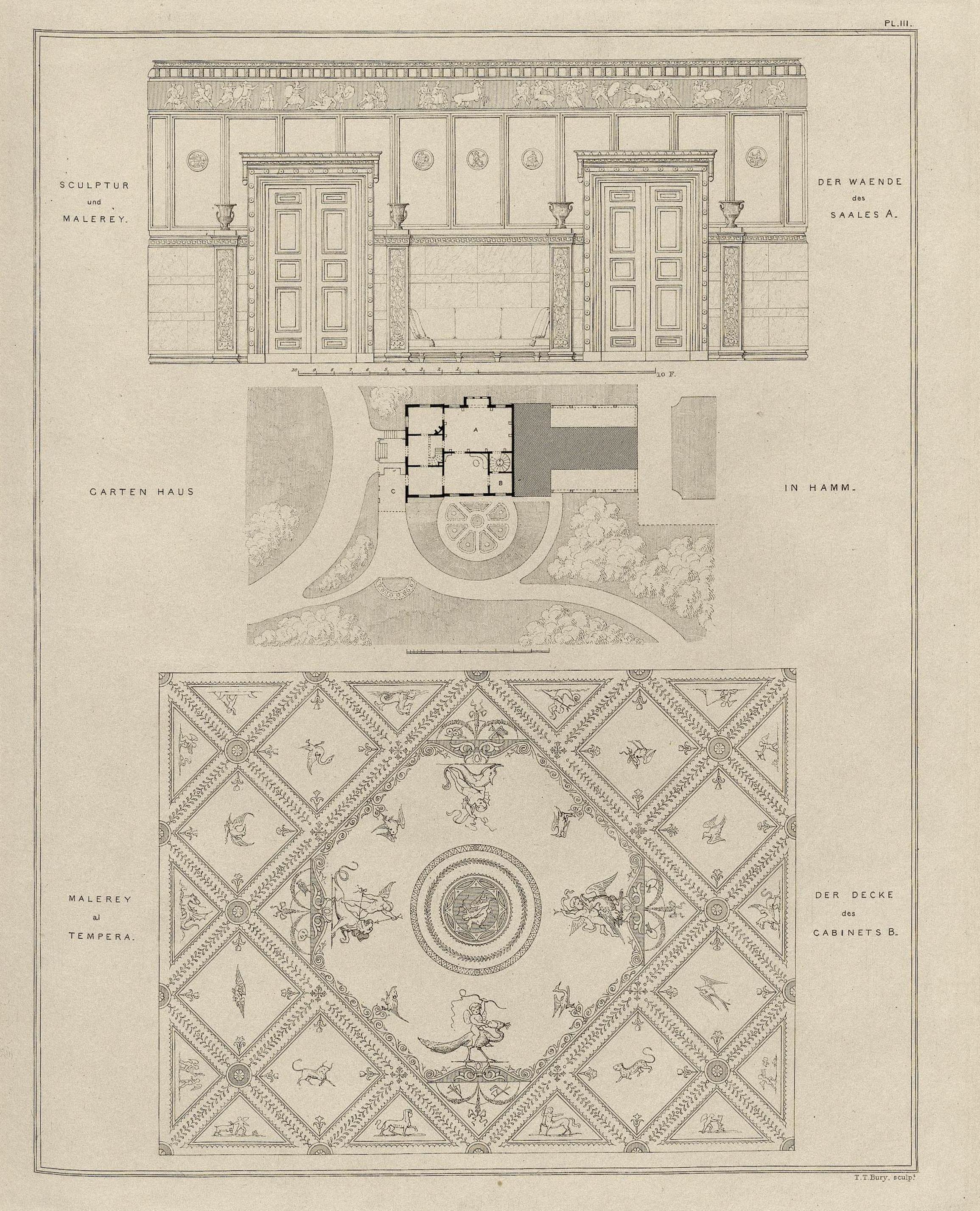 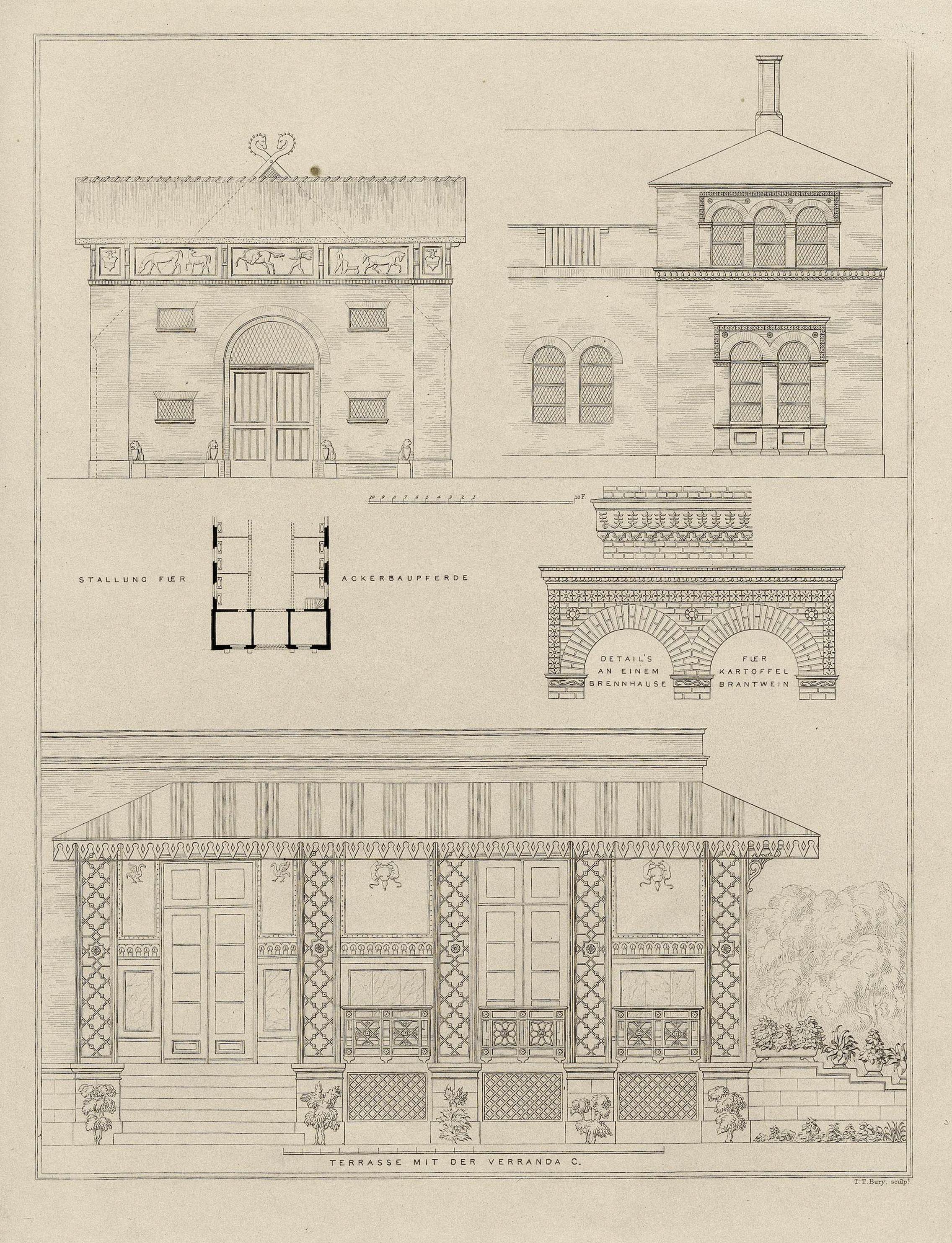 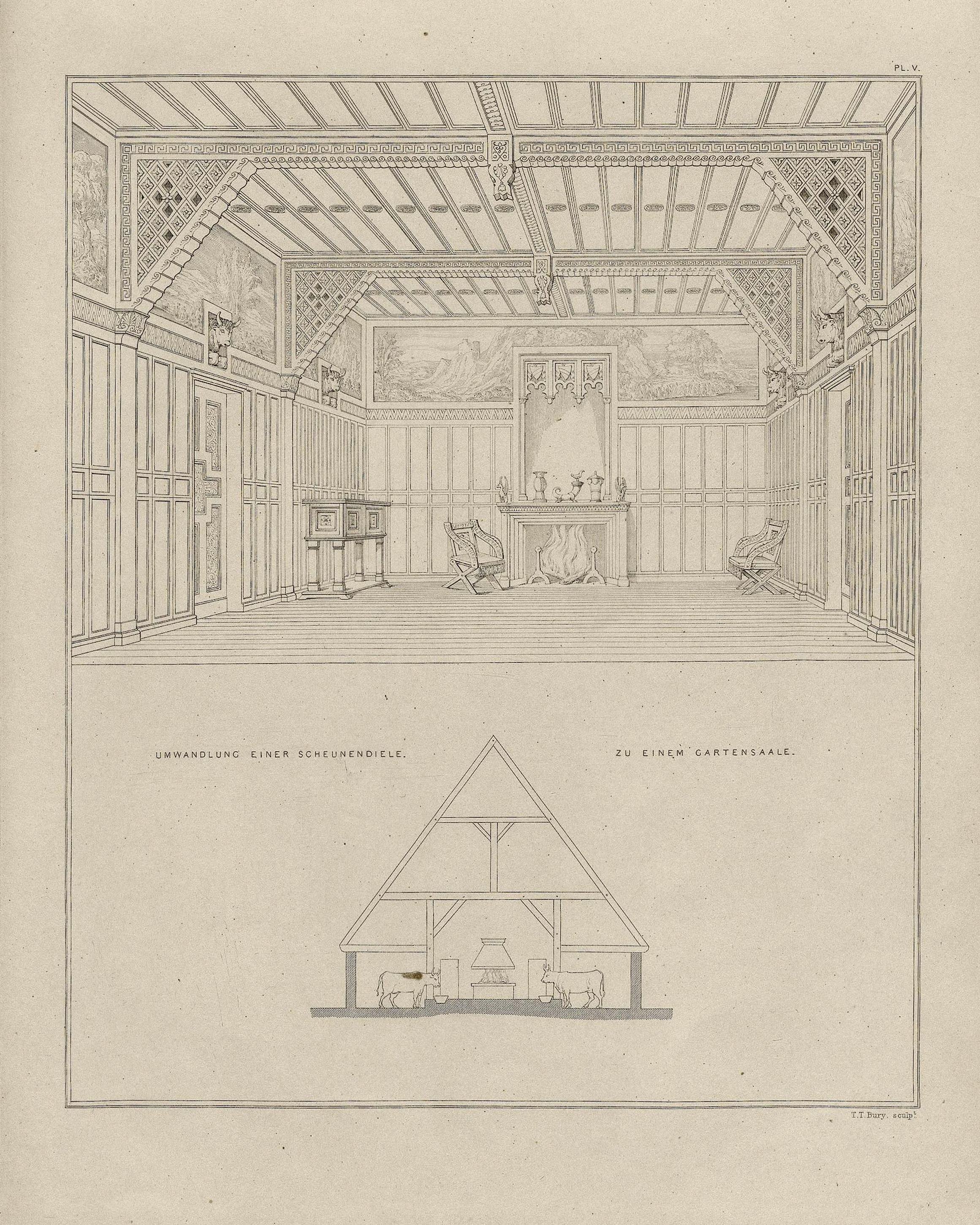 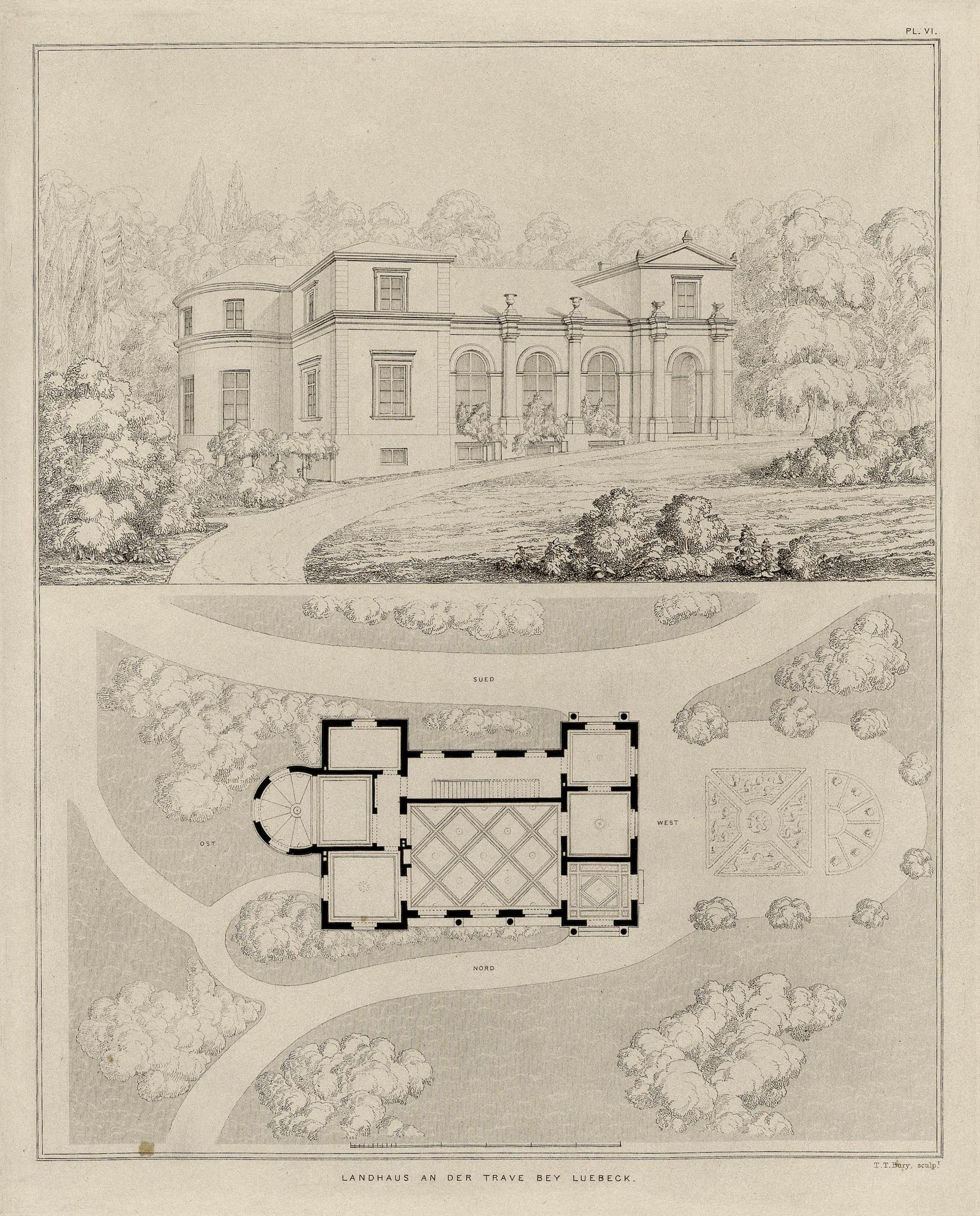 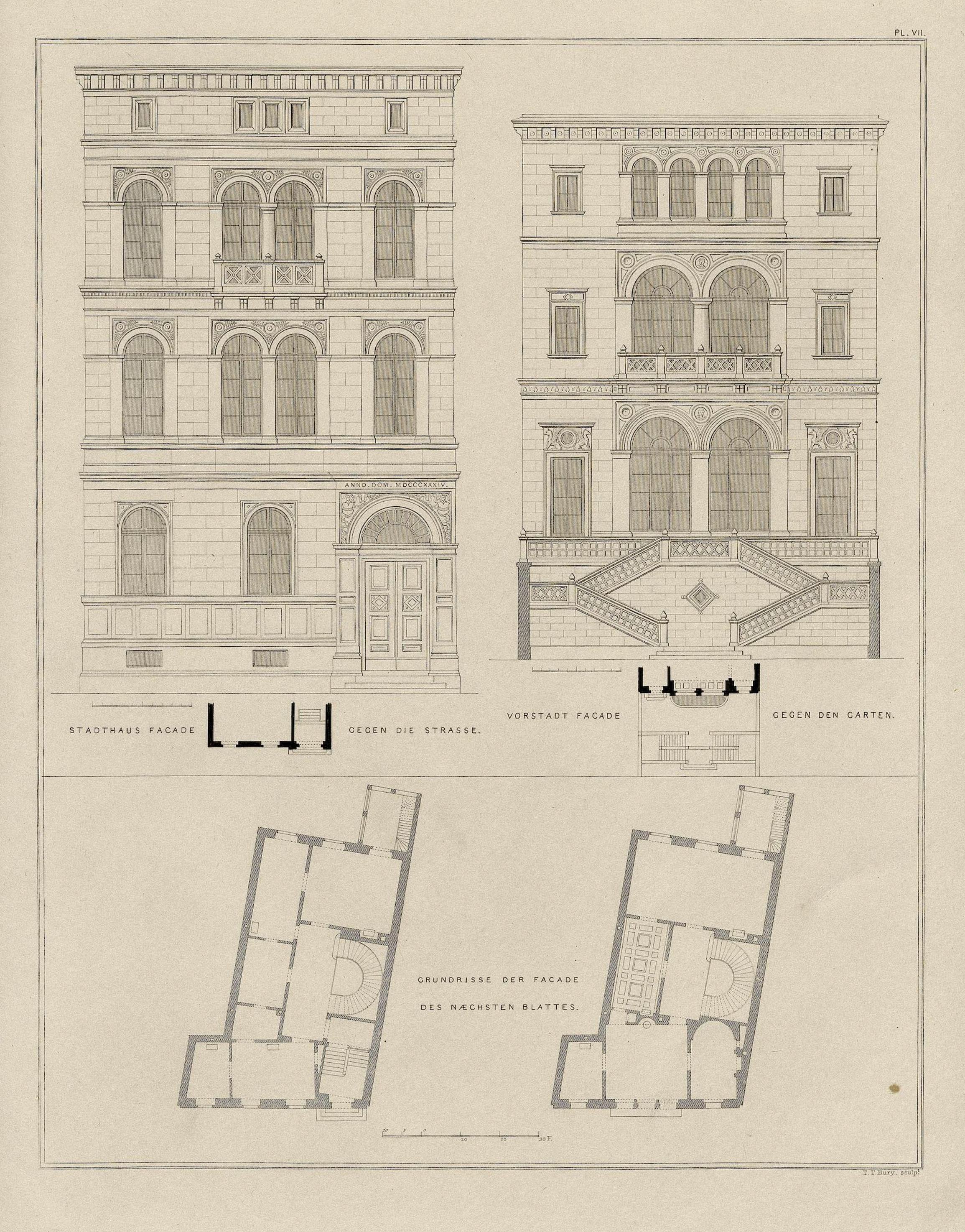 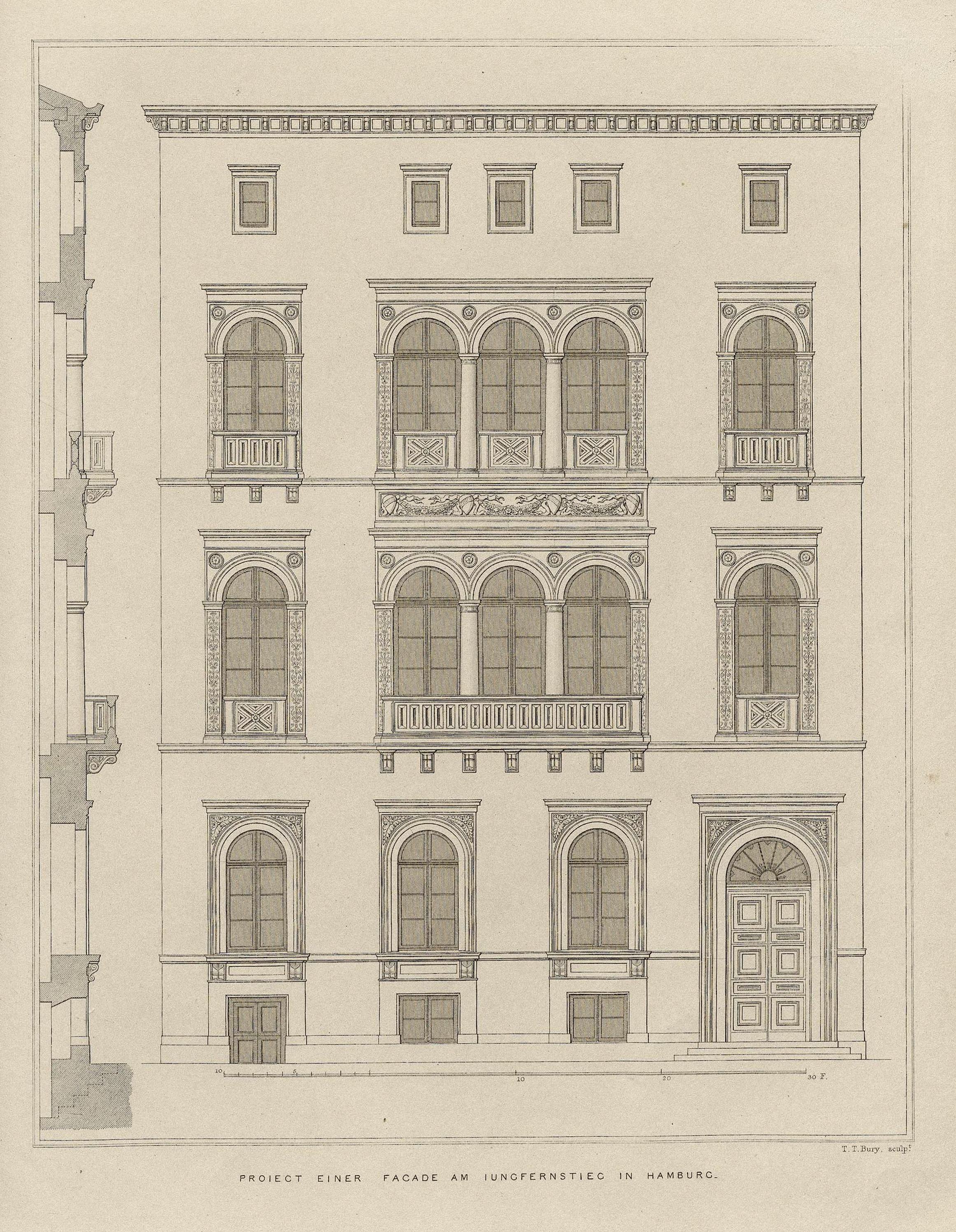 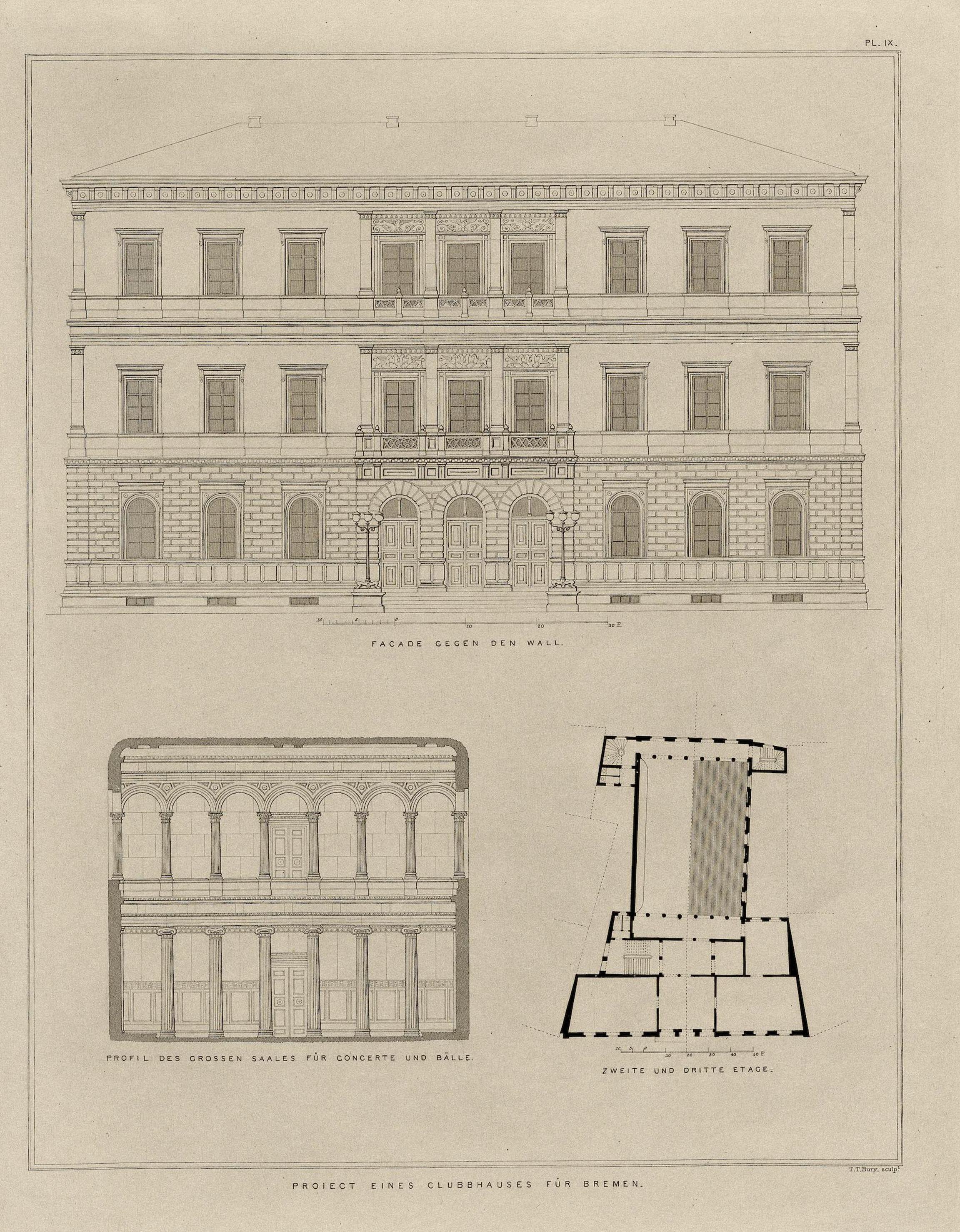 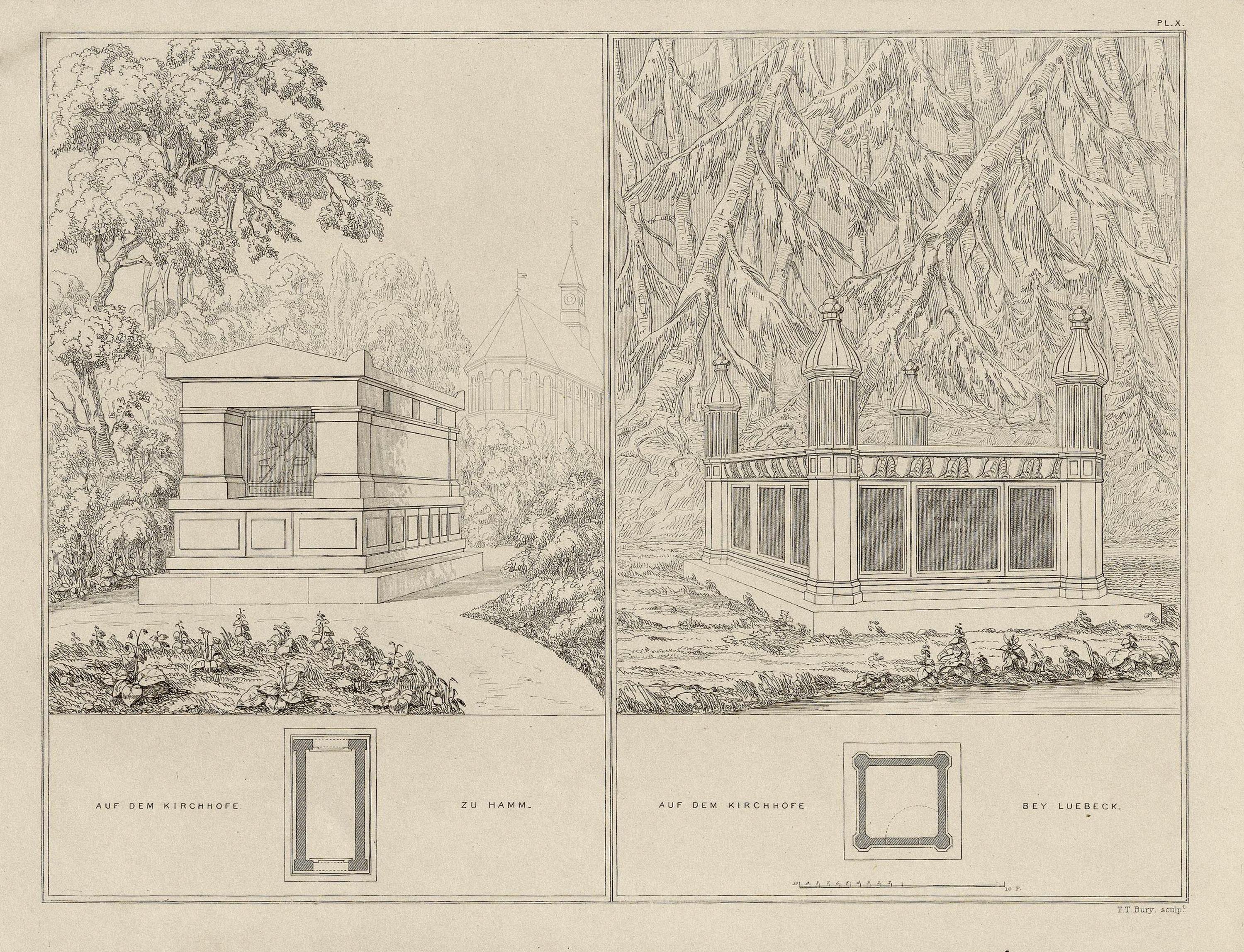 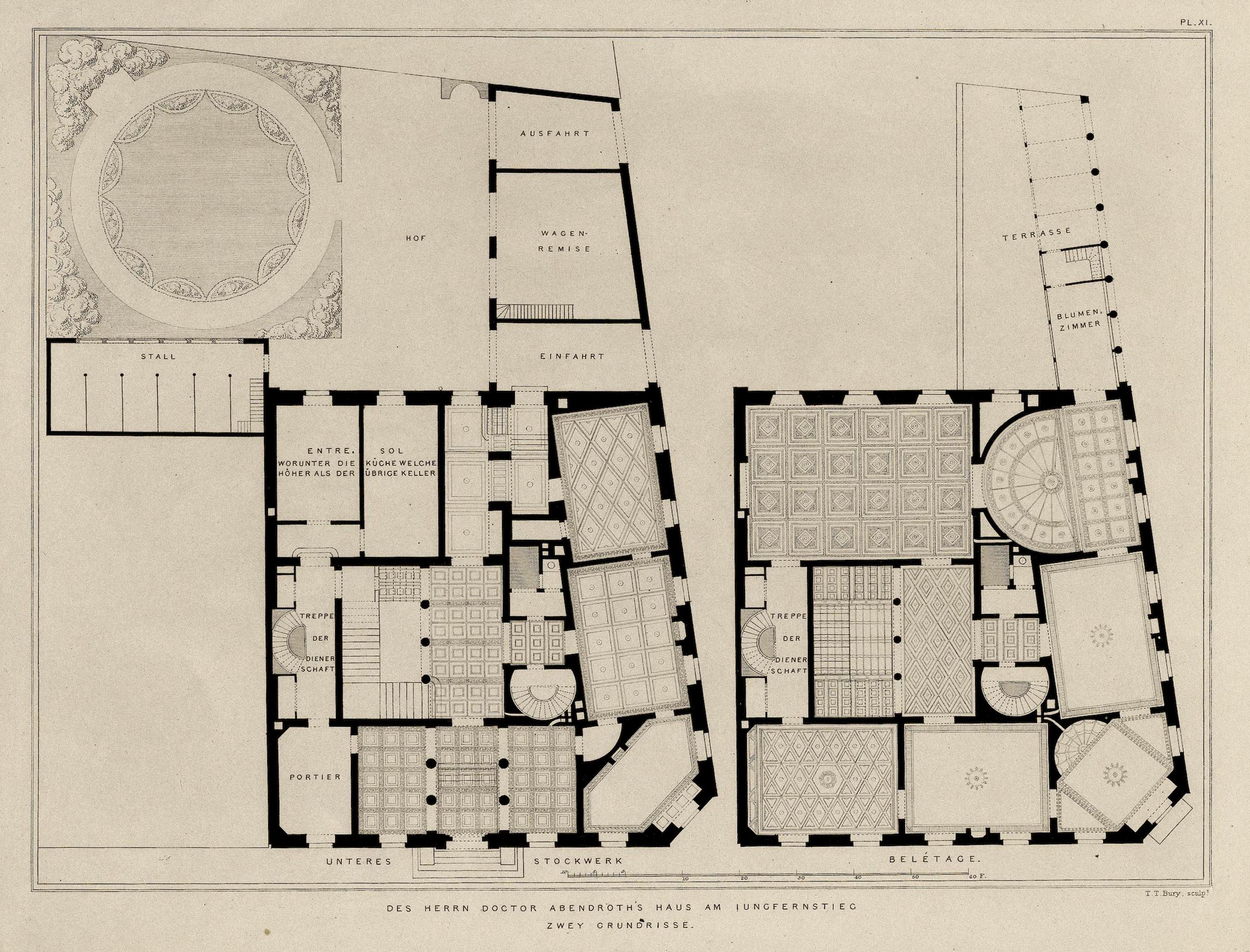 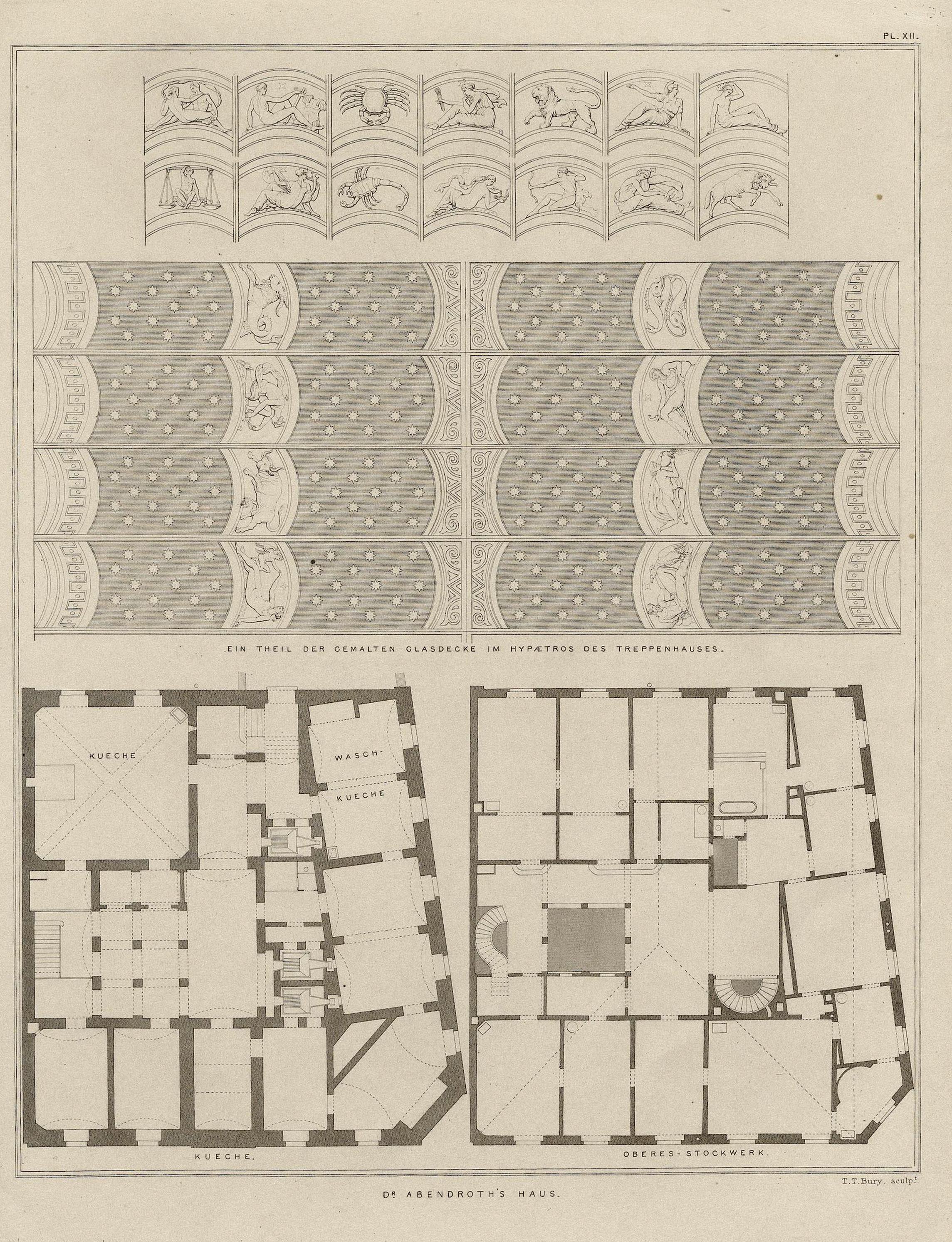 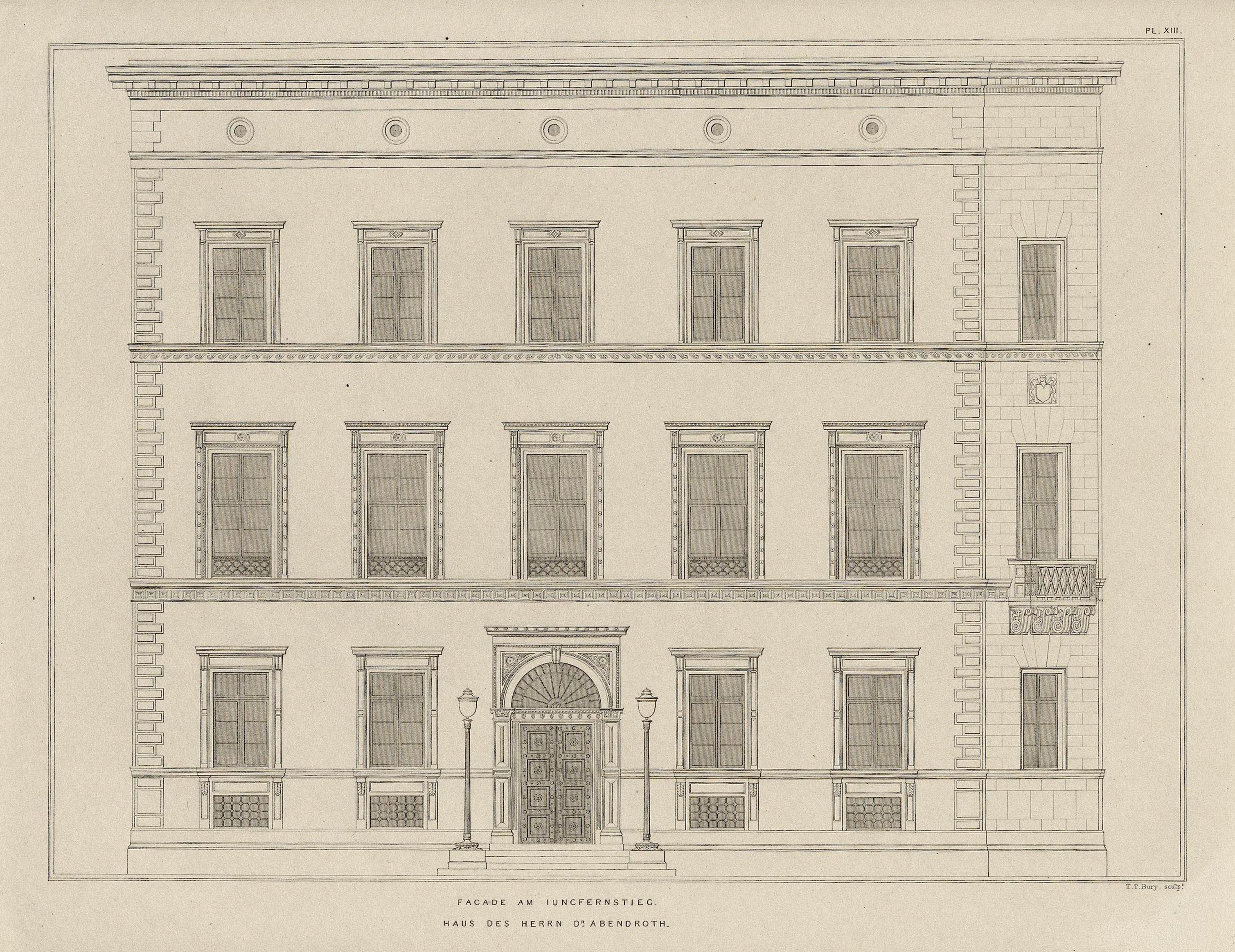 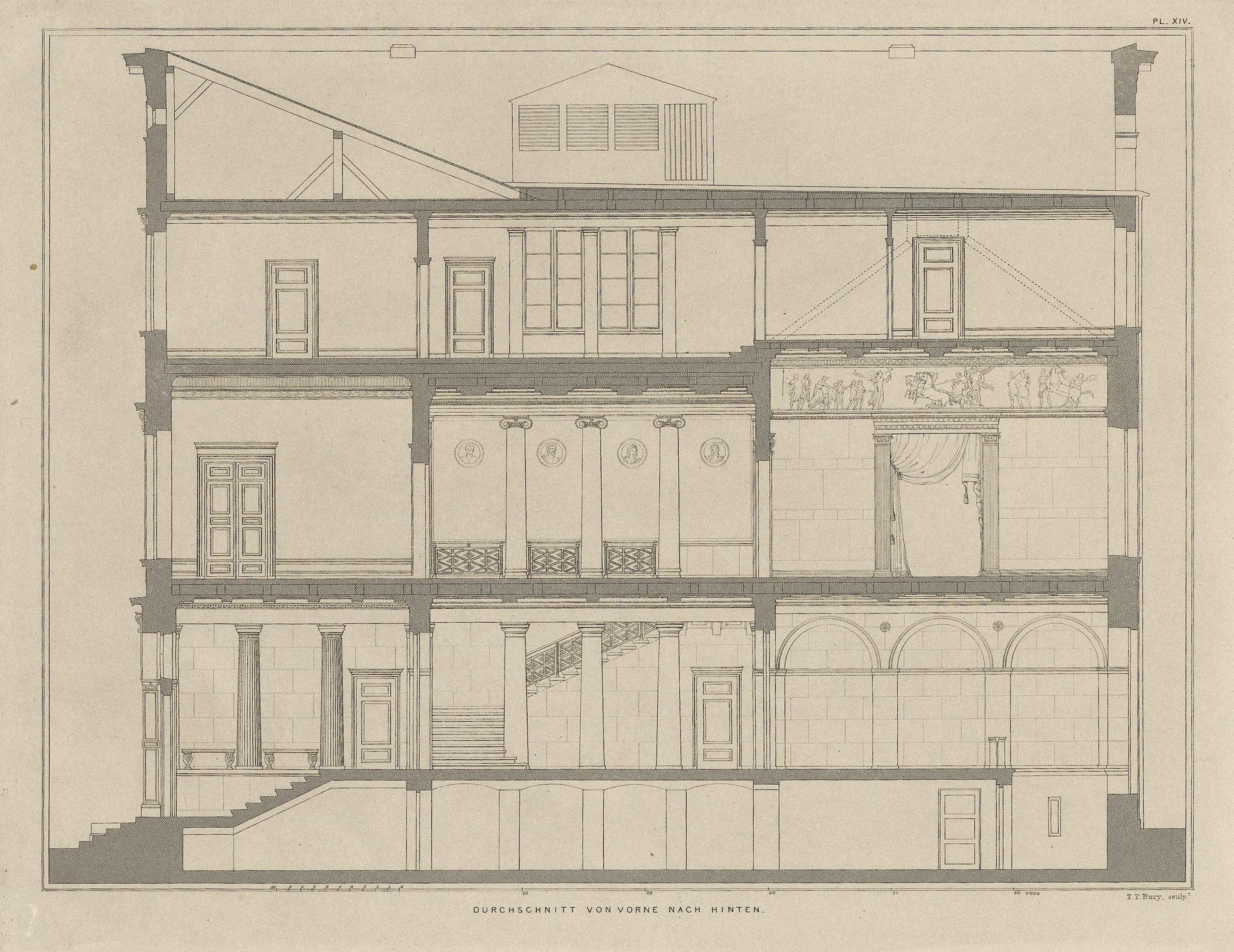 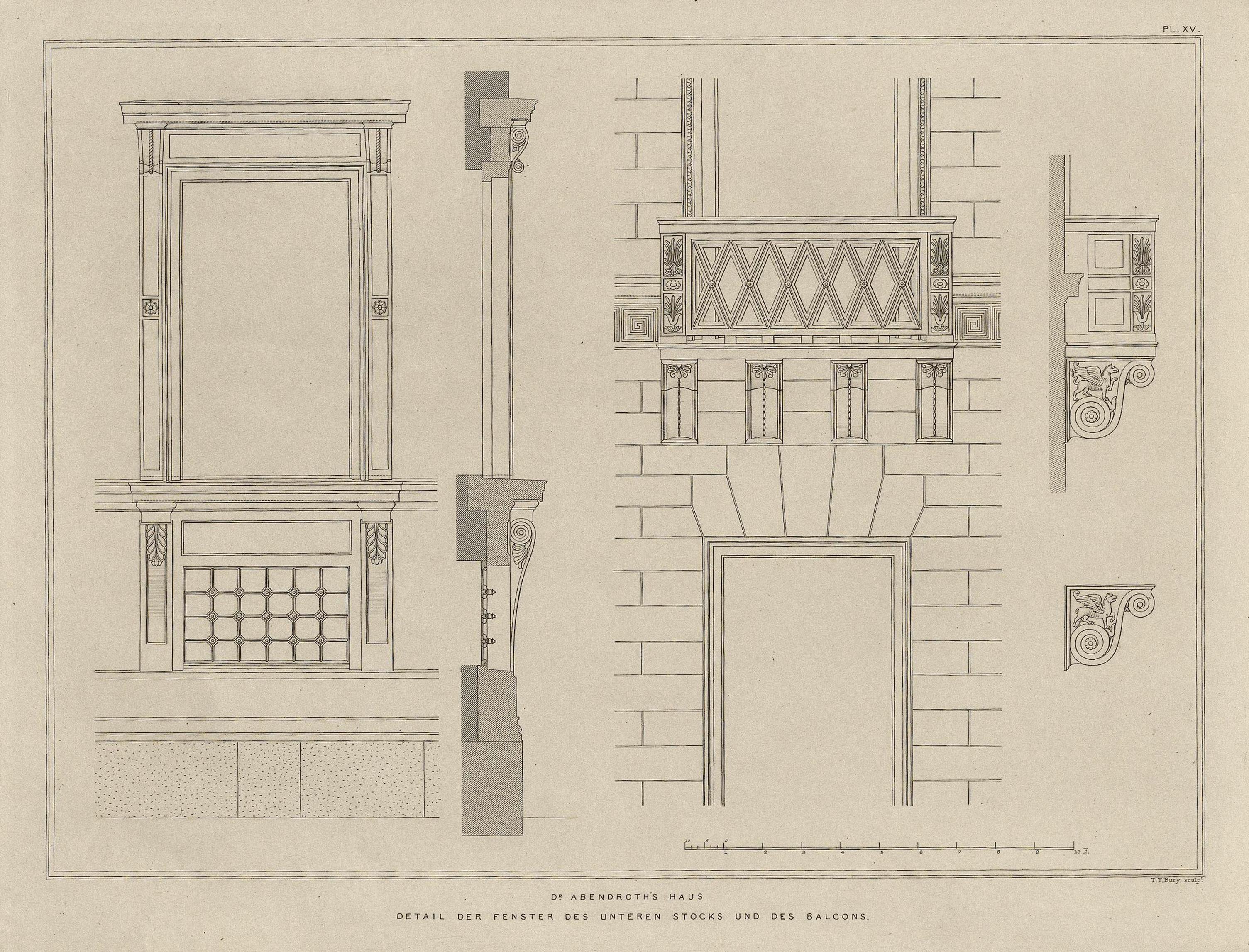 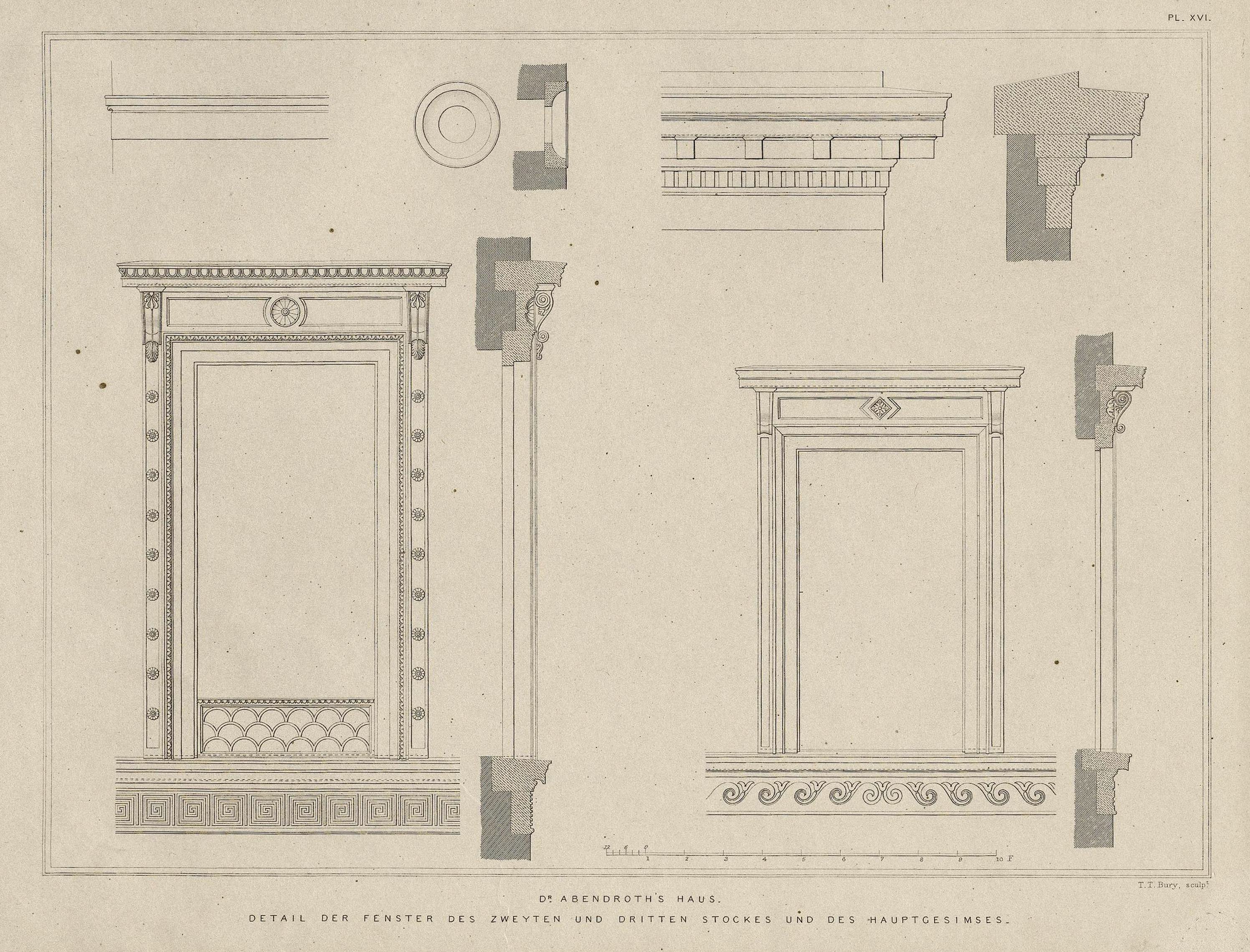 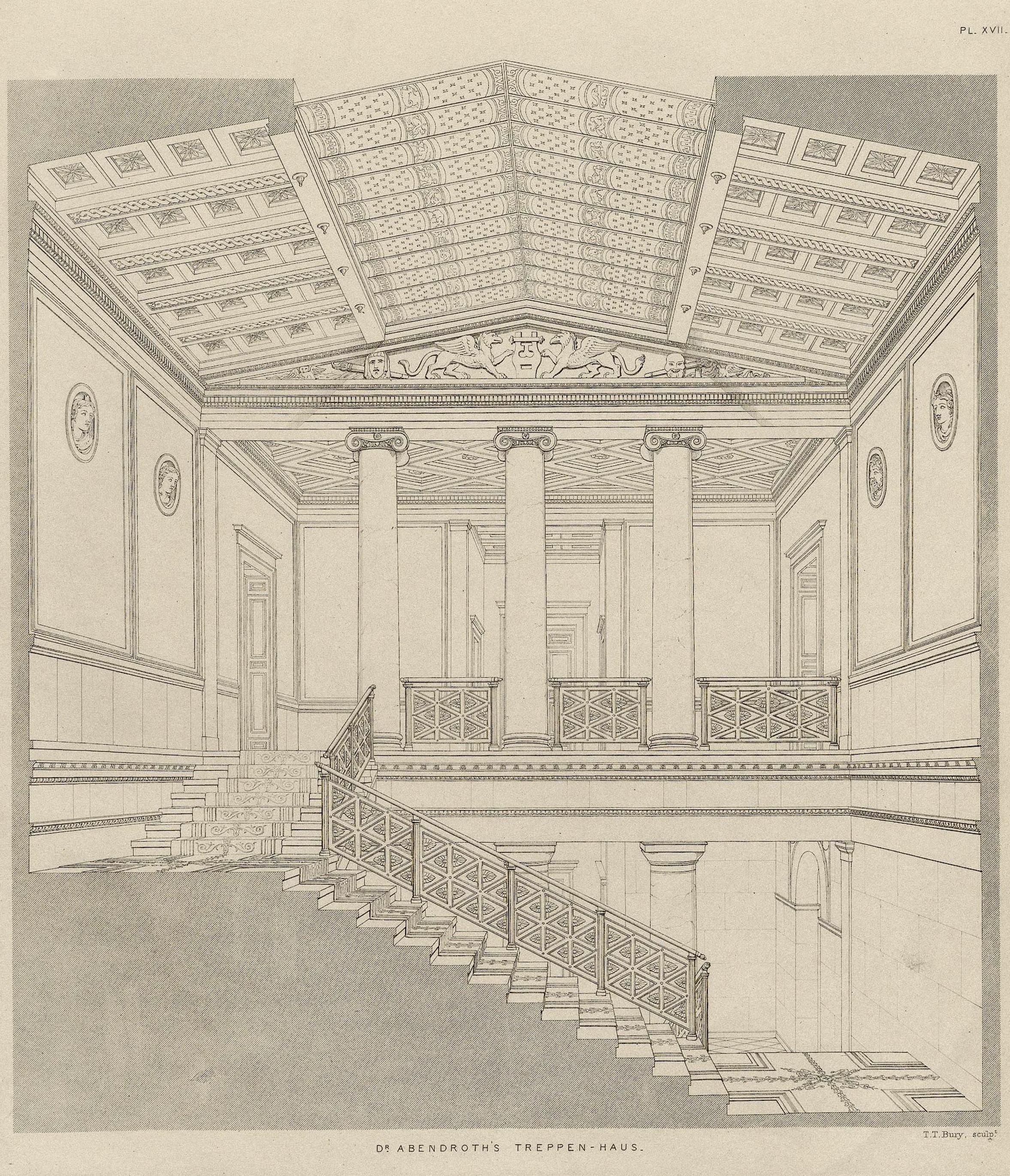 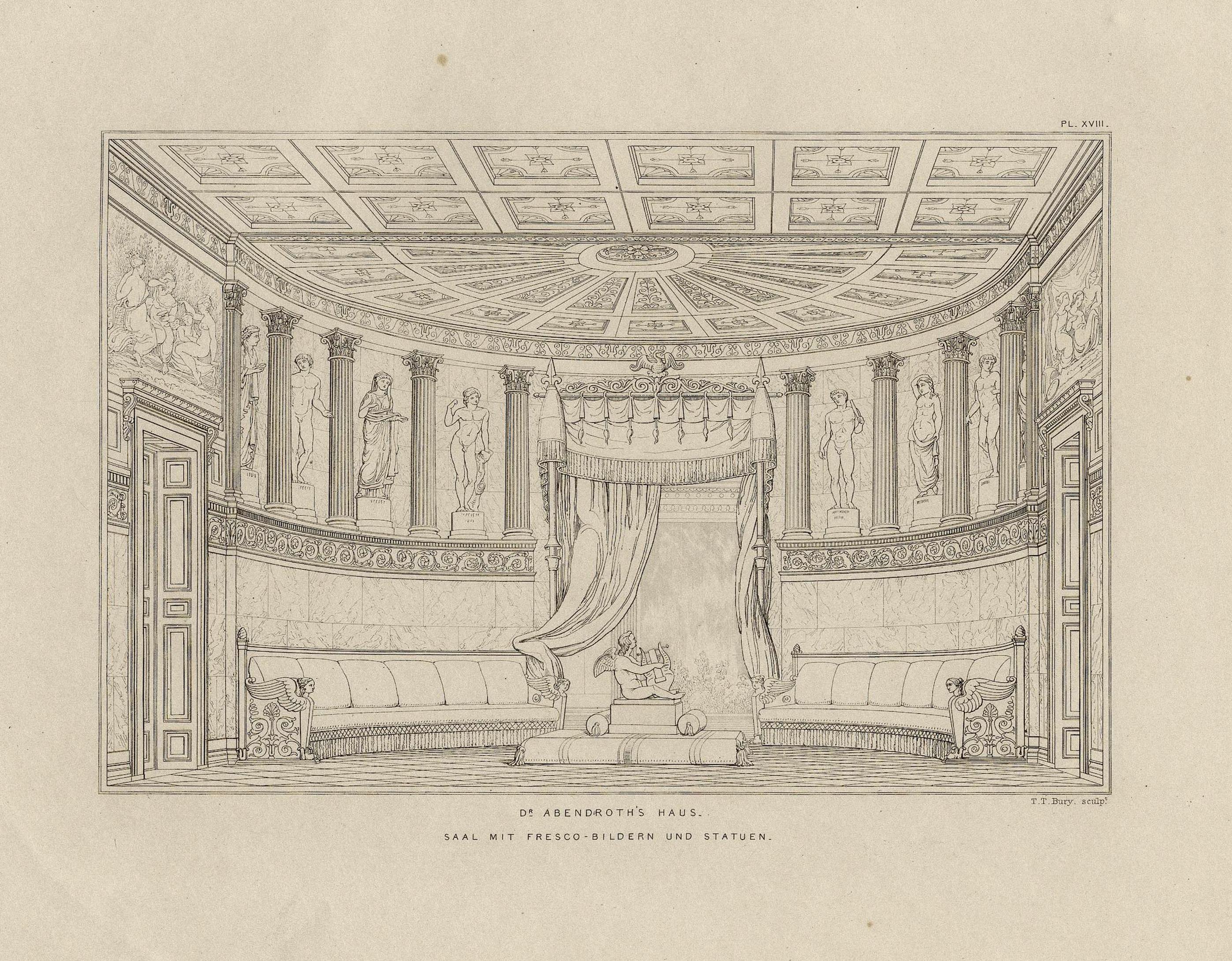
Download link (pdf; yandexdisk; 66.3 MB) (Heidelberg U Library)
Download link (pdf; yandexdisk; 51.6 MB) (Электронекрасовка)
14 января 2026, 15:42
0 комментариев
|
Партнёры
|






Комментарии
Добавить комментарий