
|
|

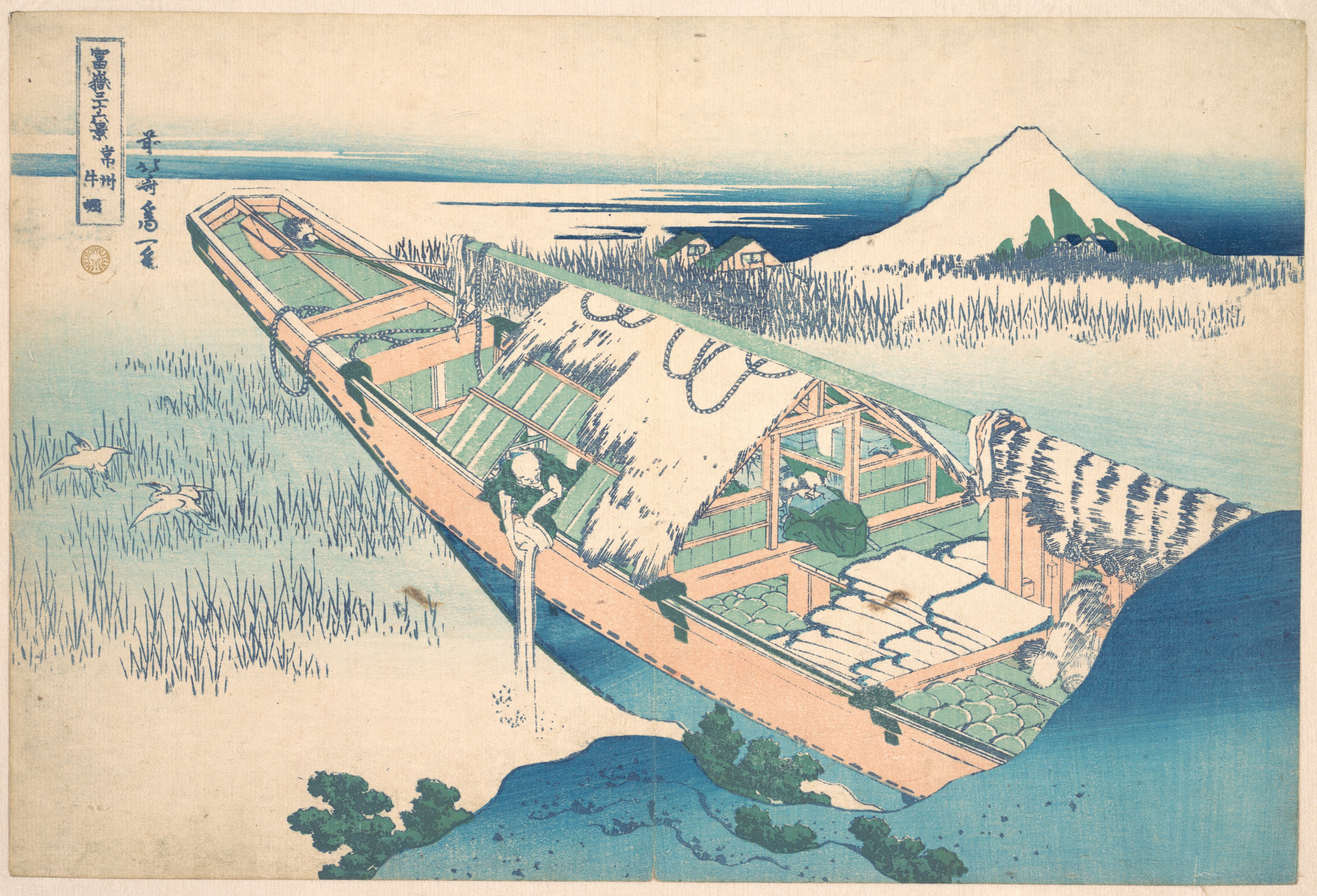
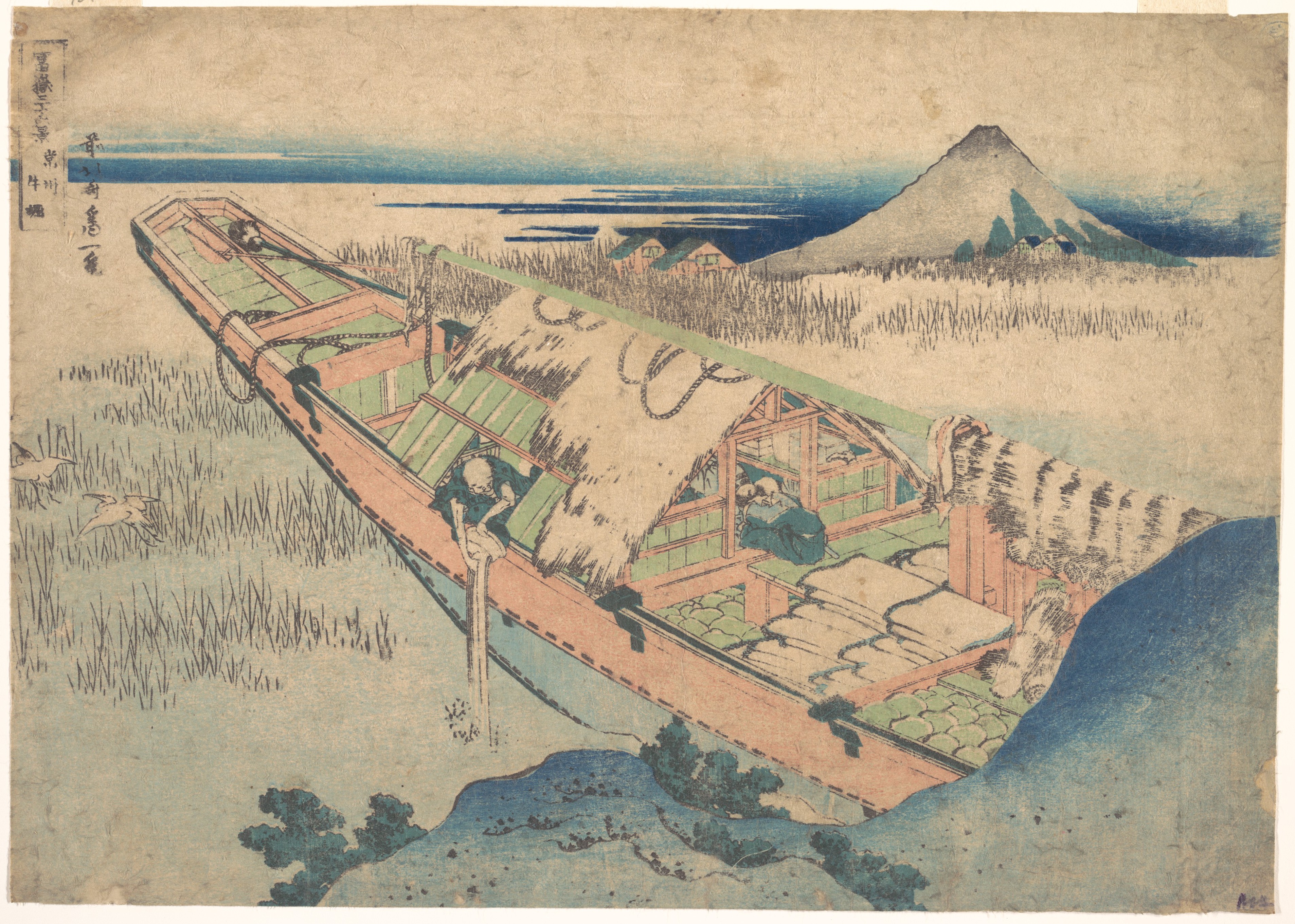
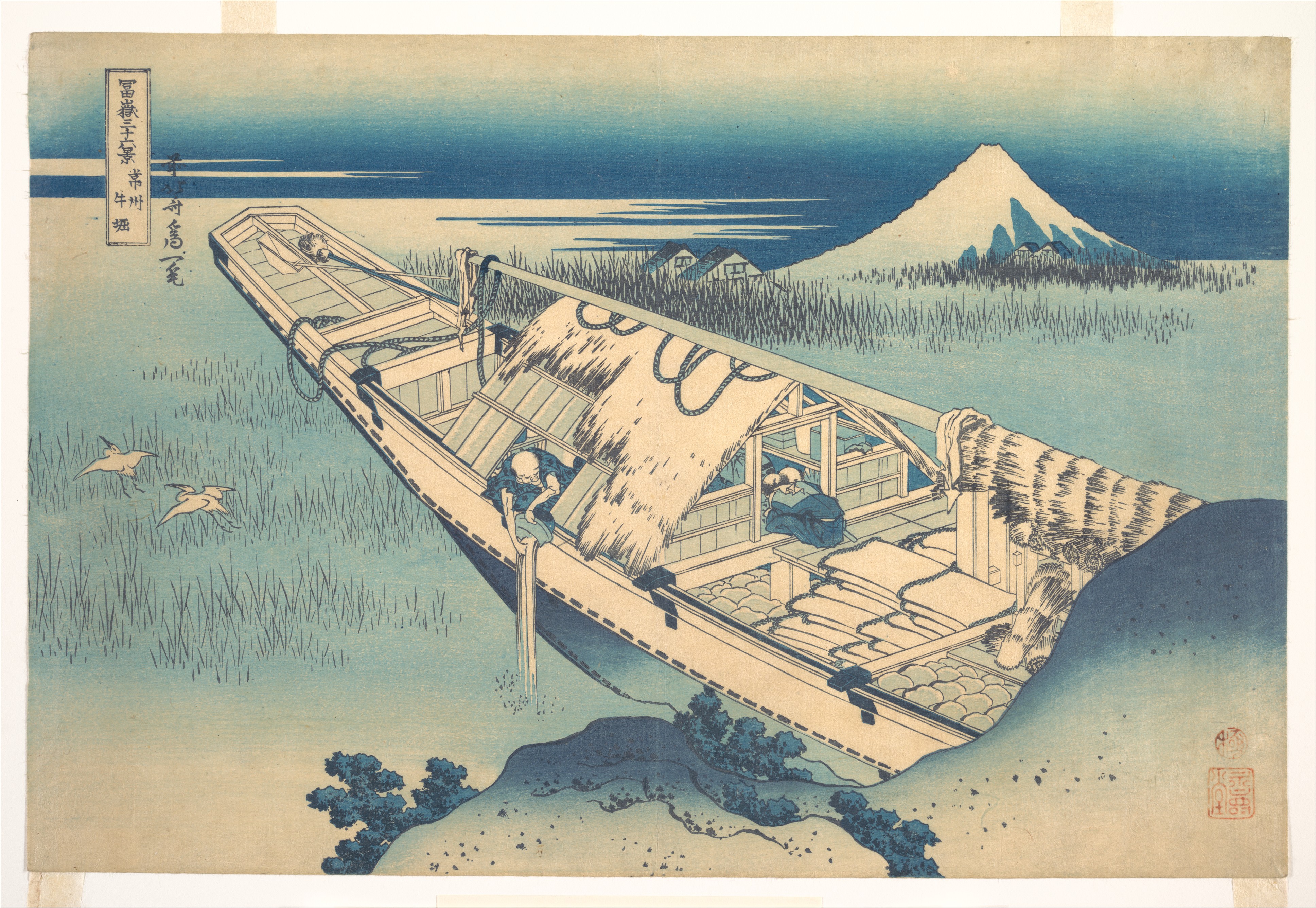
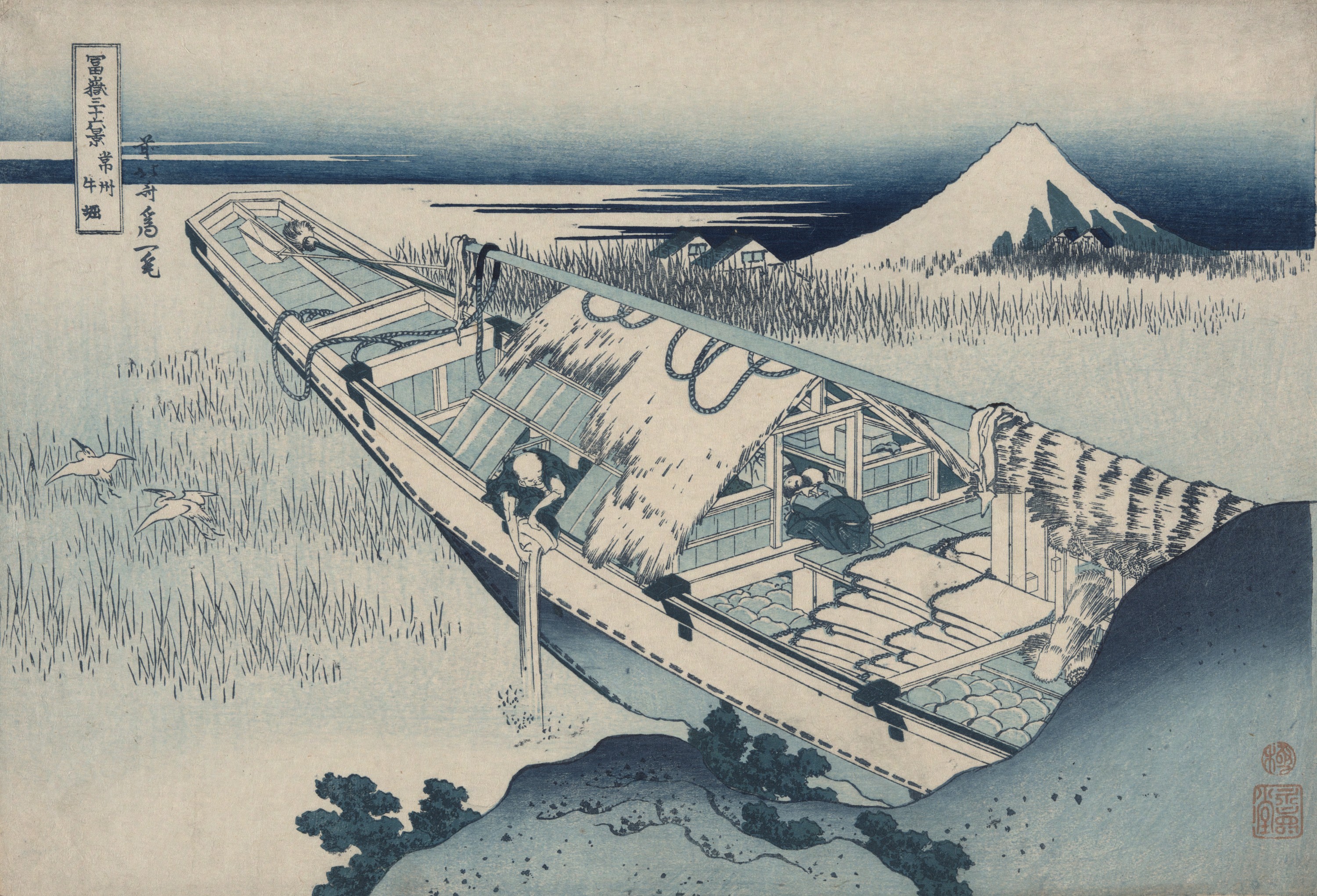
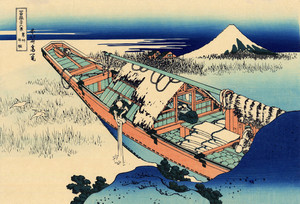
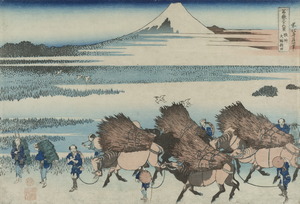
Кацусика Хокусай. Тридцать шесть видов Фудзи: № 19. Канал Усибори в провинции Хитати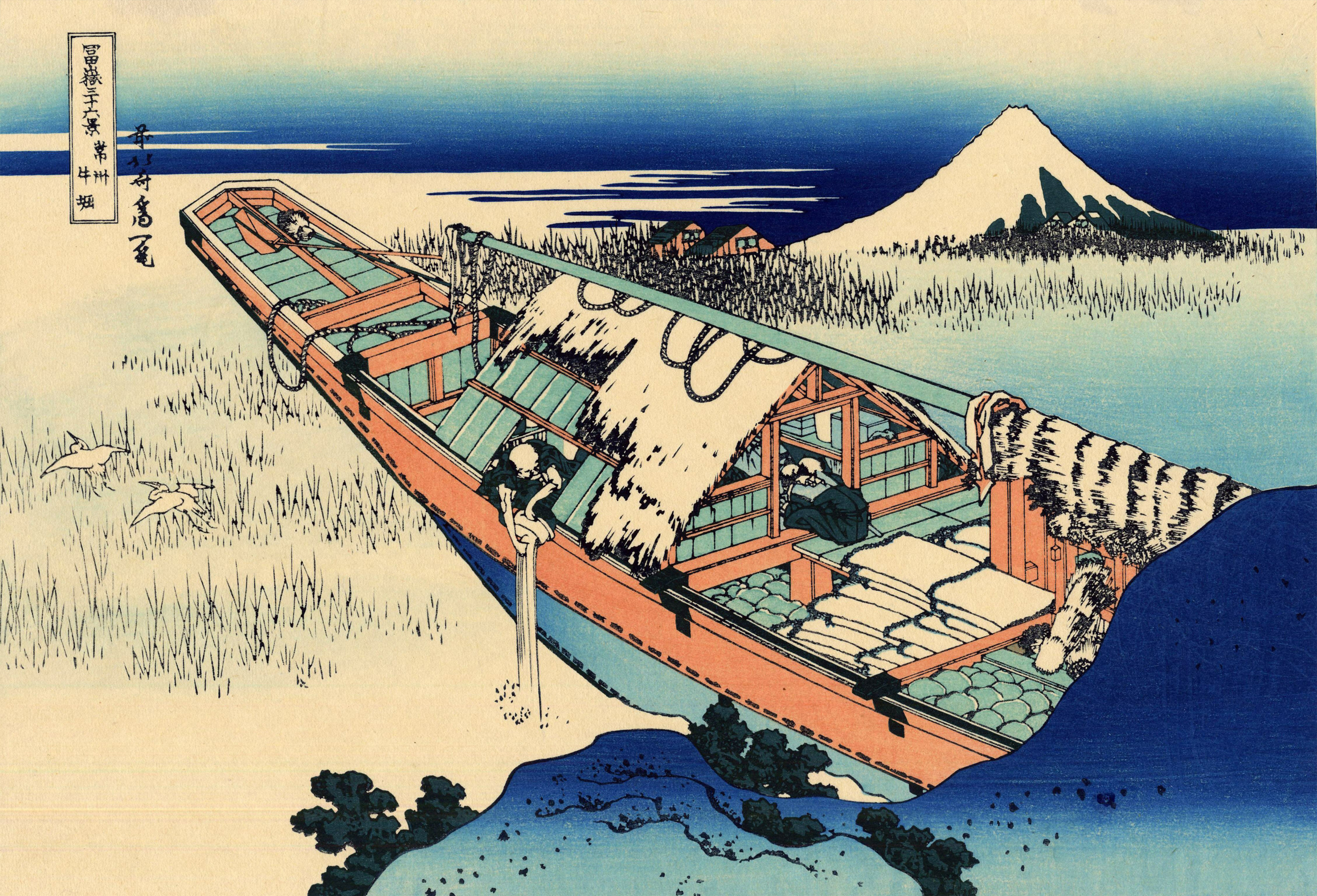
Katsushika Hokusai. Ushibori in Hitachi Province, from the series Thirty-six Views of Mount Fuji
冨嶽三十六景 常州牛掘Ushibori in Hitachi Province (Jōshū Ushibori), from the series Thirty-six Views of Mount Fuji (Fugaku sanjūrokkei)Artist: Katsushika Hokusai (1760–1849)Period: Edo period (1615–1868)Date: ca. 1830–32
Mount Fuji appears in all kinds of scenes in the thirty-six prints of the series. In a sense, Hokusai offers a world view in which the sacred mountain is omnipresent.
Here we find the bleak life of people who make their living on the water. Ushibori in the province of Hitachi (present-day Ibaragi Prefecture) is a lakeside district east of Edo. Although Ushibori is quite far from Mount Fuji—perhaps the easternmost region from which the mountain is still visible—Hokusai reassures his viewer that here, too, people live with the great mountain.
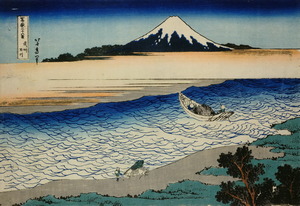
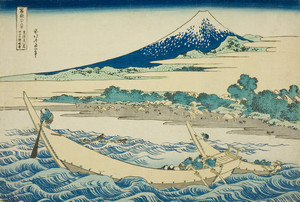
In this composition, Hokusai literally cuts the boat off in the center, by using the rocky hillock in the lower right corner to crop the unseen portion of the boat. This cropping technique gives a sense of immediacy to the picture, and the scene is further enlivened by the rush of two herons to the left, Mount Fuji stands etched solemnly in relief in the background. (Metmuseum)
Lying some 60 miles from Itako, in Hitachi province (present-day Ibaraki prefecture), Ushibori was on Lake Kasumi-ga-ura. Because it had an inland harbor connecting to Chöshi, many boats and ships stopped at Ushibori. A boat of gigantic scale anchors in the marshy water, its bow rising diagonally to the left, its stern concealed by a dune. Frightened birds fly away before it. Everything seems silent; no wind stirs the grasses. Beyond the dense reeds rises a snow-covered Fuji. A boatman washing rice for his dinner leans against the gunwale to pour out the rinse water. Hokusai is obviously interested in the life of this boatman, and he meticulously depicts the boat inside and out. The roof or shelter is made of kaya, a native plant of the area. The boat's cargo - sacks of some sort of product and reed mats - is stowed in an orderly manner, and on the shelf of the cabin are the boatman's books and ledgers. This evocative composition shows the lonely life of the boatman on a winter evening. Perhaps Hokusai, a strong, almost eccentric man and far from sentimental about human life and problems, here unexpectedly reveals the tender side of his personality. The simple color scheme, consisting only of shades of blue, green, and brown, creates a serene landscape. The key-block was printed in blue. (The Asian Art Museum of San Francisco, HOKUSAI AND HIROSHIGE – Great Japanese Prints from the James A. Michener Collection, Honolulu Academy of Arts: The Asian Art Museum of San Francisco, 1998 Page 74. Cat.25)
In this woodblock print, the use of varied shades of indigo (ai), as well as clean, sharp lines, creates a serene atmosphere. The stillness of the scene is broken by the sound of a bucket of water being poured into the marsh, which sends two egrets into flight. Katsushika Hokusai freezes this moment of transition in his image. The artist’s excellent use of bokashi, or color gradation, can be seen in the background, where Mount Fuji rises above the reeds into a deep blue sky that fades to white at the top. (artgallery.yale.edu)
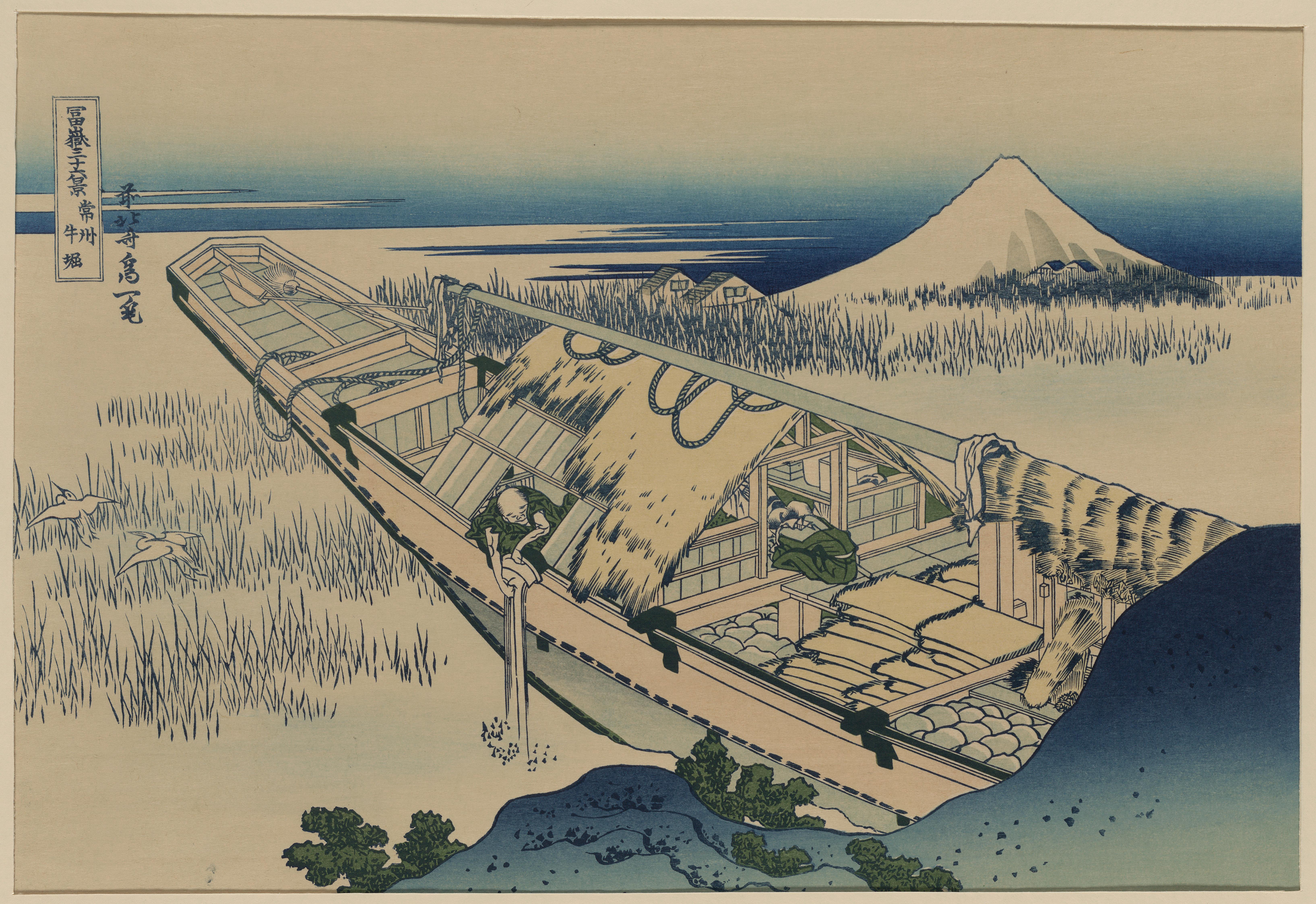
Katsushika Hokusai. Ushibori in Hitachi Province, from the series Thirty-six Views of Mount Fuji
Канал Усибори в провинции Хитати
Усибори — место в провинции Хитатинокуни, по сути, его можно назвать городом на воде, обращенным к туманной северо-западной бухте Итако. Вероятно, сюда доходили большие лодки. Это место использовалось как перевалочная база на водном пути. На гравюре изображена большая лодка типа «томабунэ». Ее крышу покрывали камышовыми циновками, а дно было подходящим для навигации по туманной неглубокой бухте. Хокусай со свойственной ему манерой аккуратно и тщательно пишет оснастку этого необычного судна. В направлении носа лодки вспорхнули две белые птицы.
Поиски пространственных соотношений — вот, что больше всего интересует художника. Он видит в пространстве, в изображении образа природы некую всеобщую, объединяющую среду. Обычно композиция строится таким образом, что в нижней части листа можно увидеть некую «опорную точку» в виде какого-либо предмета на переднем плане или в виде темного красочного пятна. Очень характерна в этом плане гравюра «Канал Усибори в провинции Дзёсю». Здесь опорной точкой является лодка, которая скользит из правого угла в левый и делит лист по диагонали на две части. Композицию уравновешивает Фудзи, изображенная в правом углу.
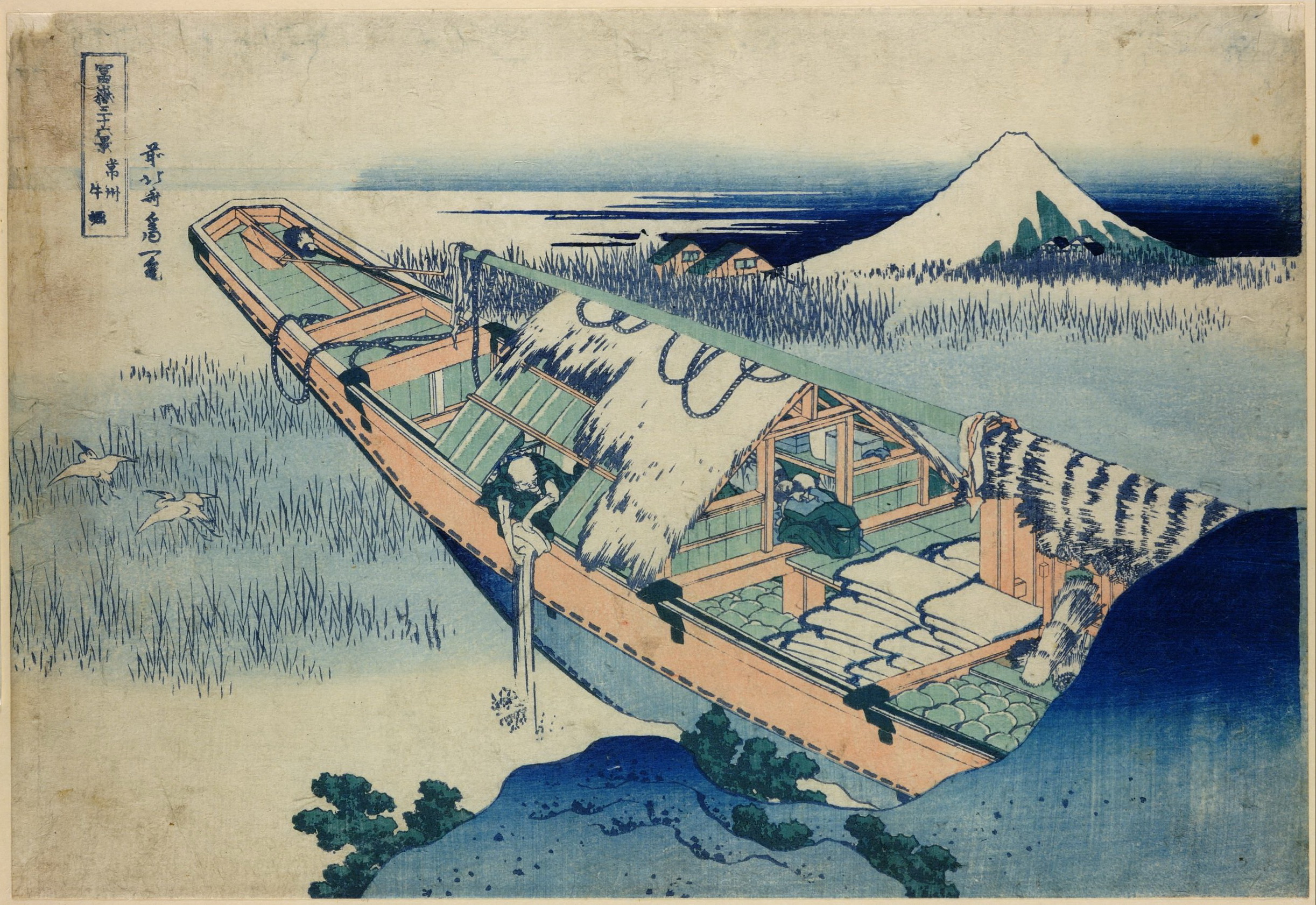
Katsushika Hokusai. Ushibori in Hitachi Province, from the series Thirty-six Views of Mount Fuji
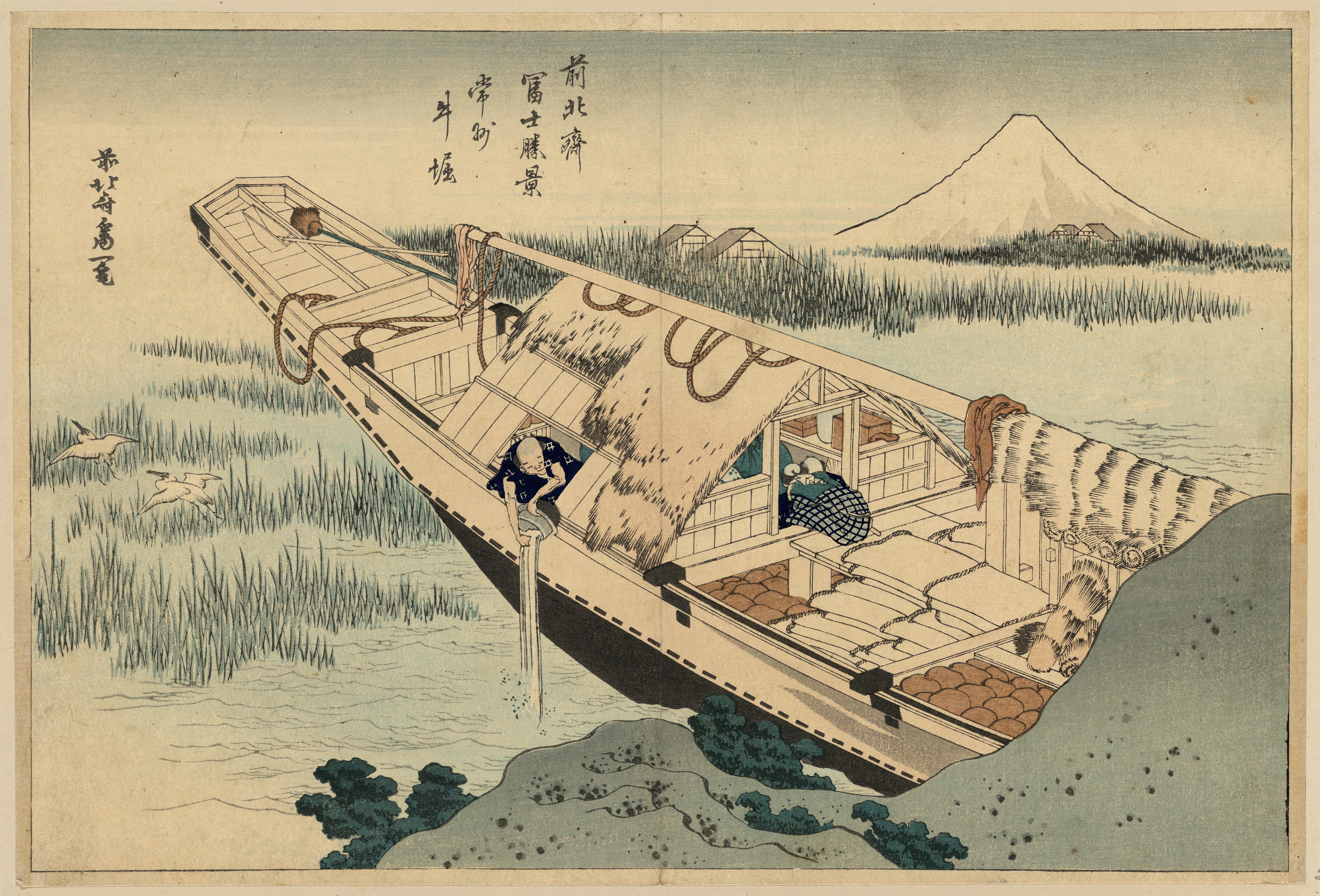
Katsushika Hokusai. Ushibori in Hitachi Province, from the series Thirty-six Views of Mount Fuji
Katsushika Hokusai. Ushibori in Hitachi Province, from the series Thirty-six Views of Mount Fuji
Katsushika Hokusai. Ushibori in Hitachi Province, from the series Thirty-six Views of Mount Fuji
Katsushika Hokusai. Ushibori in Hitachi Province, from the series Thirty-six Views of Mount Fuji
Katsushika Hokusai. Ushibori in Hitachi Province, from the series Thirty-six Views of Mount Fuji

Katsushika Hokusai. Ushibori in Hitachi Province, from the series Thirty-six Views of Mount Fuji
Все 46 гравюр серии «Тридцать шесть видов Фудзи» | Thirty-six Views of Mount Fuji | 富嶽三十六景 | Fugaku Sanjūrokkei
16 декабря 2022, 11:34
0 комментариев
|
Партнёры
|






Комментарии
Добавить комментарий