
|
|
|

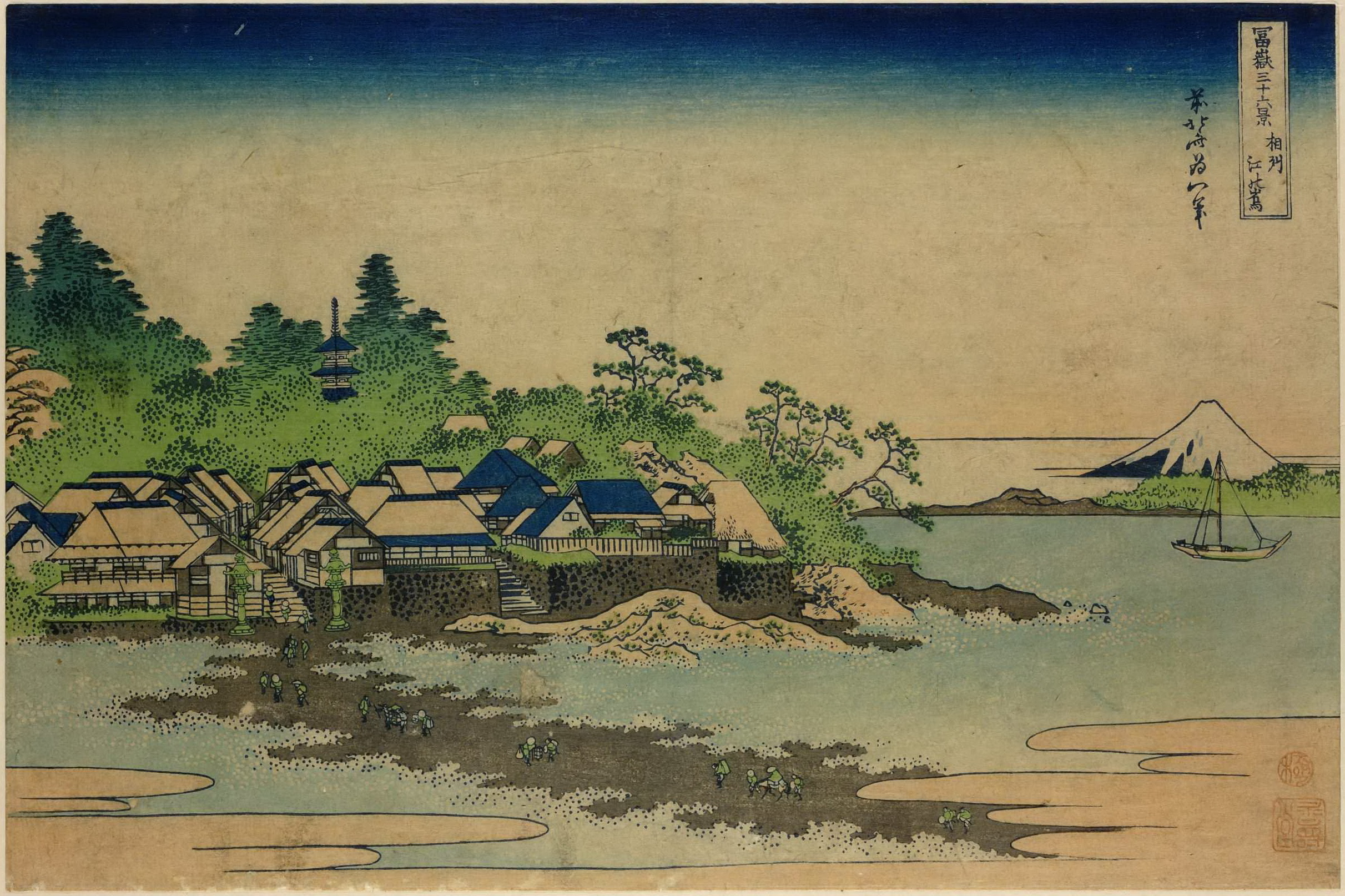
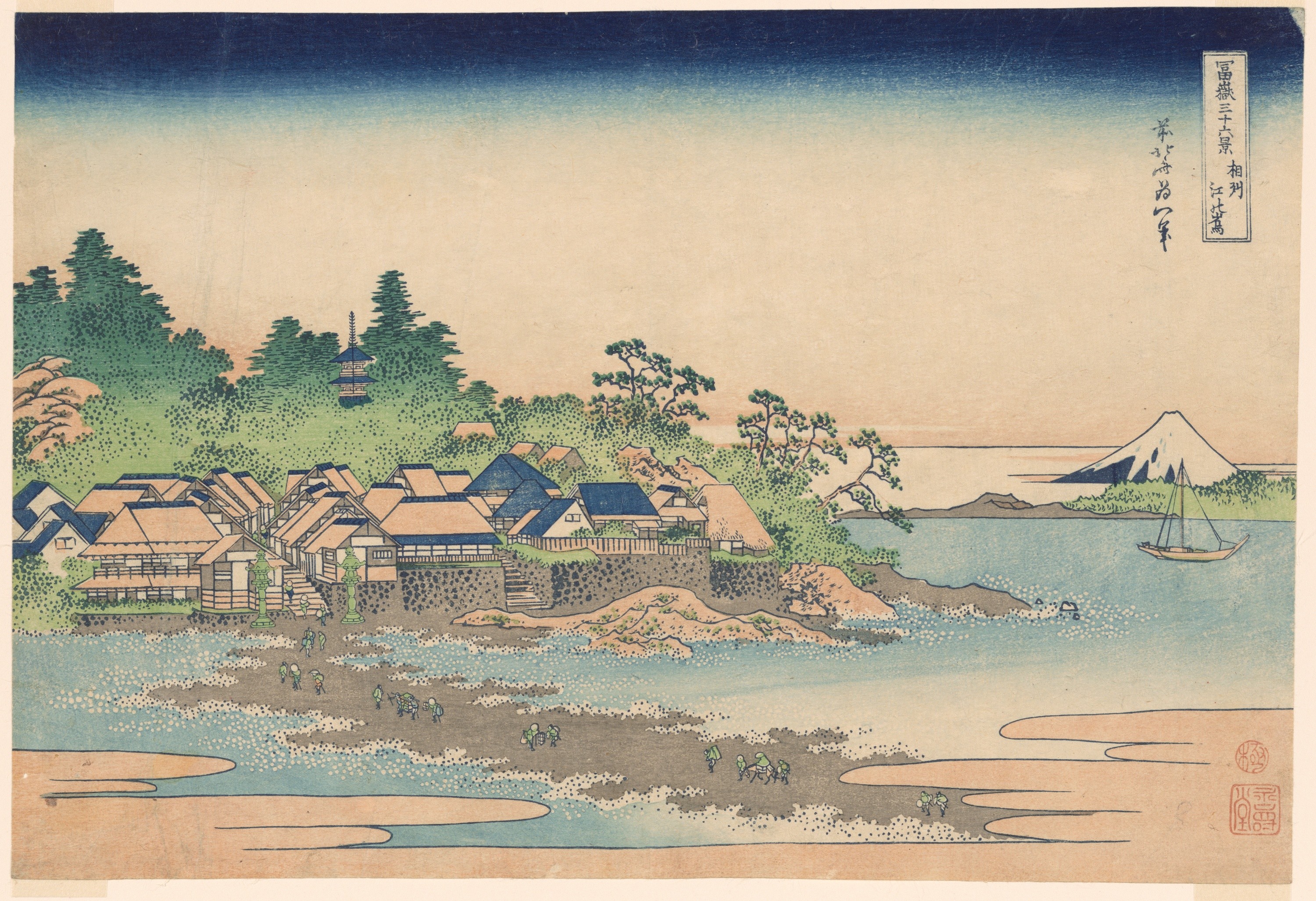
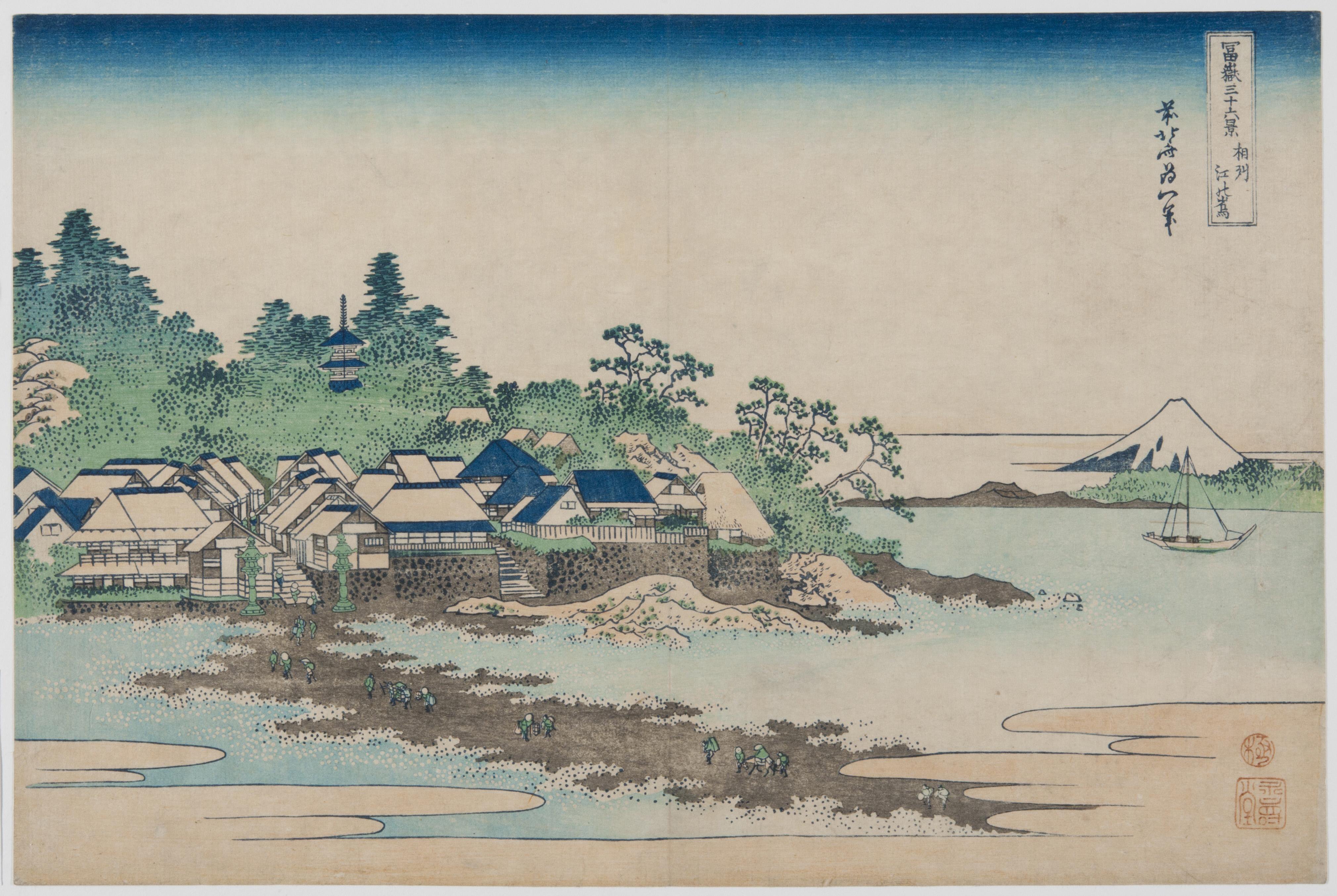
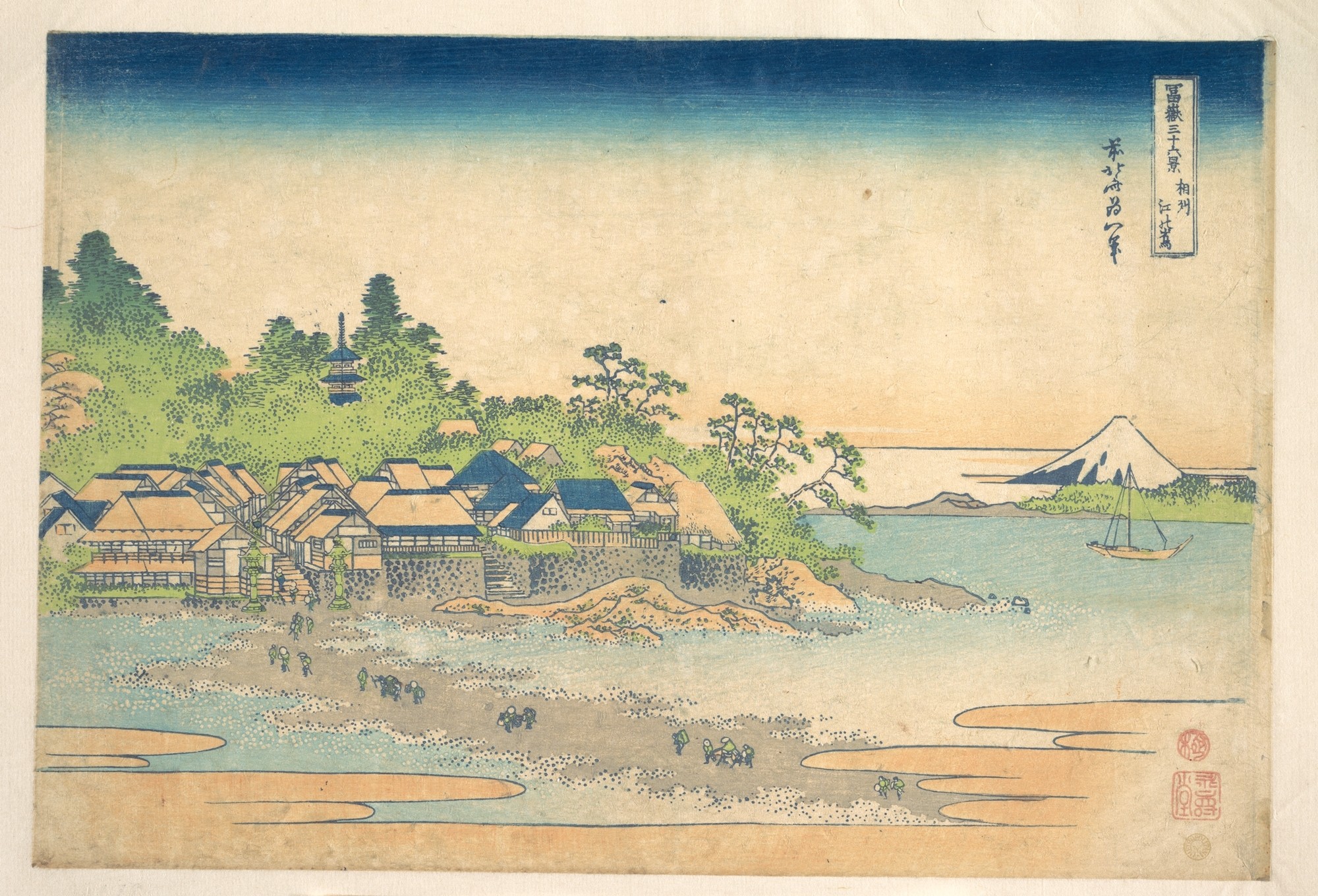
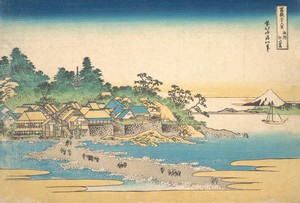
Кацусика Хокусай. Тридцать шесть видов Фудзи: № 25. Остров Эносима в провинции Сагами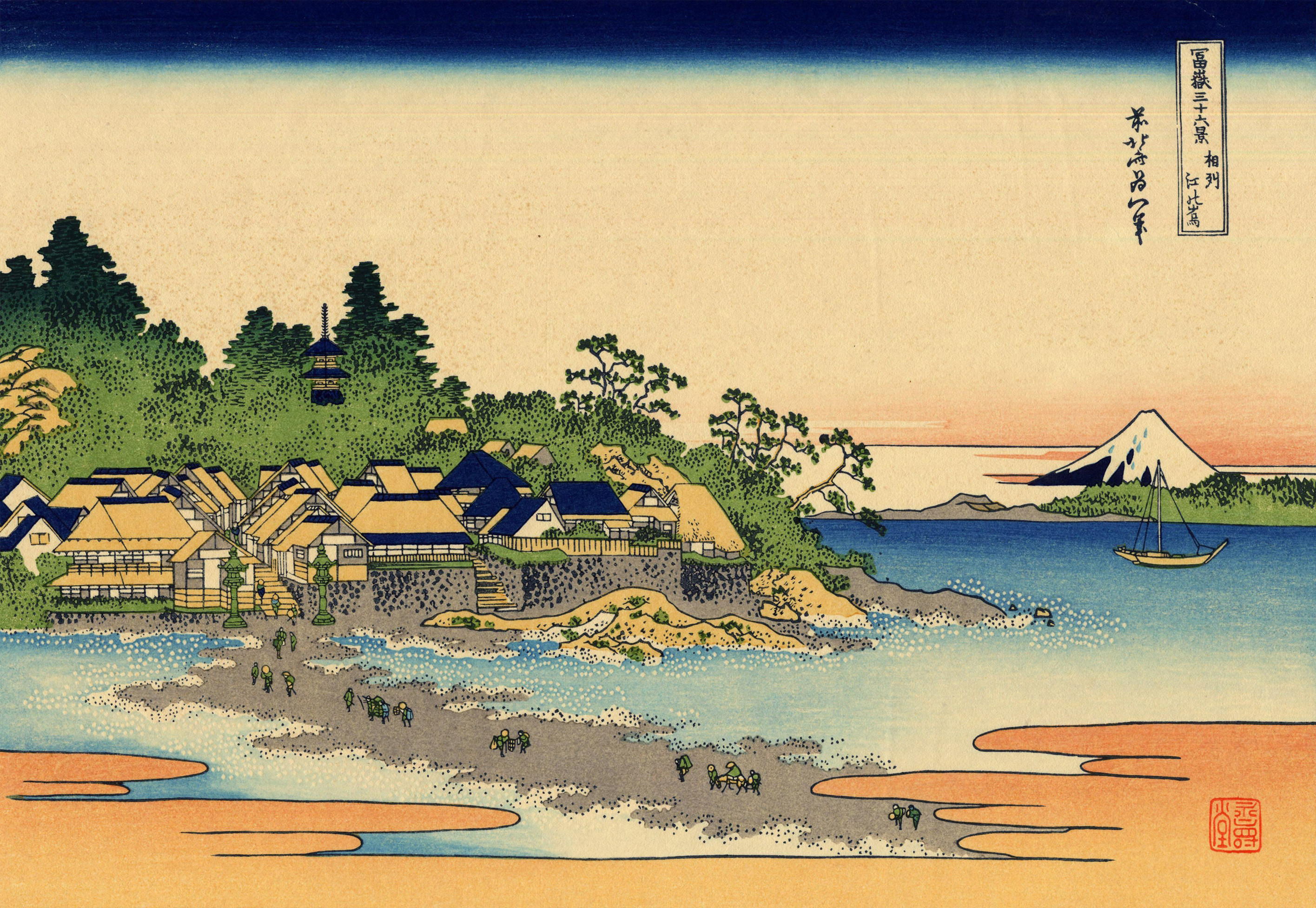
Katsushika Hokusai. Enoshima in Sagami Province, from the series Thirty-six Views of Mount Fuji
冨嶽三十六景 相州江の島Enoshima in Sagami Province (Sōshū Enoshima), from the series Thirty-six Views of Mount Fuji (Fugaku sanjūrokkei)Artist: Katsushika Hokusai (1760–1849)Period: Edo period (1615–1868)Date: ca. 1830–32
In the Enoshima in Sagami Province print Hokusai depicted the five-story pagoda at Ryukoji Temple that is located in a distant view of the forest of young leaves. The worshipers who visit the Temple are walking along the sandbar during the low tide of the sea. There are various inns and souvenir shops portrayed along the shore. The Enoshima in Sagami Province expresses the sparkle foaming of the waves striking the beaches and rocks in an Ukiyo-e style woodblock. (metmuseum)
Enoshima is a small island lying off Kamakura on the Pacific coast, some 35 miles south of Tokyo. It attracted large numbers of pilgrims, who visited a temple there that was dedicated to Benzaiten, the Buddhist female deity of long life, good fortune, and victory in war. Seen from a high position on the mainland, Hokusai depicts the island’s large temple compound. The tiny pilgrims, some riding horses led by men, some carried in a palanquin, and some on foot, are crossing a sandbar at low tide to reach the island. The approach to the temple is marked by two stone lanterns, one on each side of the entrance to the compound, where steps lead to the main building of the temple. Fuji is visible across the water on the right side. Bubbles in the water at low tide are indicated with numerous tiny white dots, showing the technical excellence of the printing. The composition, however, suffers because of Hokusai’s excessive interest in minute details, resulting in a lack of main composition focus. The key-block was printed in blue. The publisher’s and the censor’s seal are visible in the lower right corner. (The Asian Art Museum of San Francisco, HOKUSAI AND HIROSHIGE – Great Japanese Prints from the James A. Michener Collection, Honolulu Academy of Arts: The Asian Art Museum of San Francisco, 1998 Page 81Cat. 32)
The small island of Enoshima off of Kamakura is famous for its temple dedicated to the goddess of good fortune, Benzaiten. It was an important pilgrimage site during the Edo period, and pilgrims can be seen crossing from the mainland on a small strip of land that became dry during low tide. The temple complex lies beyond, with a pagoda rising in the background. The stacked roofs of the pagoda on the left balance the triangular form of Mount Fuji on the right, providing the print with a sense of balance that is enlivened by the diagonal line of the crossing. Enoshima was a popular subject for ukiyo-e artists, including both Hokusai and Hiroshige. Prints like this would have served as souvenirs for pilgrims and other travelers to the greater Edo area. Hokusai’s use of many tiny dots to render both the forest and the receding water recalls pointillism, a Western painting technique developed in the 1880s in which tiny dots are combined to form a picture. It also evokes traditional Chinese brush techniques. In his efforts to study and incorporate a wide range of styles, Hokusai foreshadowed the increasing globalization of artistic styles that resulted from increasing international trade in the late nineteenth century. “Hokusai’s Summit: Thirty-six Views of Mount Fuji” (09/24/2009-01/06/2010)
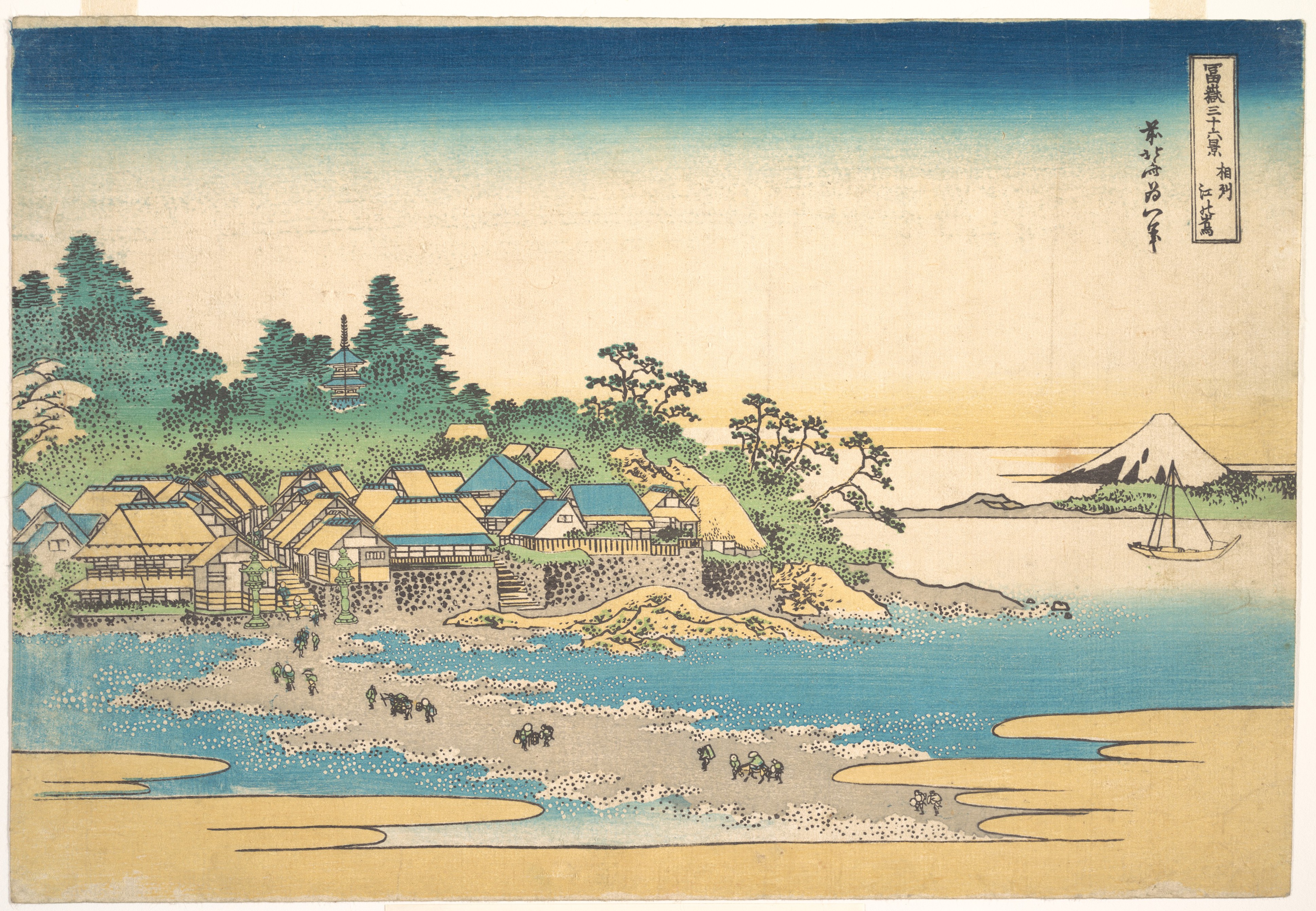
Katsushika Hokusai. Enoshima in Sagami Province, from the series Thirty-six Views of Mount Fuji
Остров Эносима в провинции Сагами
Остров Эносима — это одна из достопримечательностей, без которой, пожалуй, нельзя было бы обойтись в серии видов Фудзи. В период Эдо для жителей столицы паломничество к Бэндзайтэн, одной из семи богинь счастья, изображение которой хранилось в синтоистском святилище Эносима дзиндзя, стало особенно популярно. Многие мастера укиё-э, начиная от Киёнага и Утамаро, любили изображать это место. В первую очередь это место, где выступали знаменитые актеры.
Можно отметить, что благодаря изящным линиям, а также повторению треугольных форм и необычного способа изображения волны, эта картина обладает особой притягательной силой.
Во время отлива образуется песчаная дорога, по которой люди легко могли пешком перейти на остров. Бесшумные волны, которые набегают на песчаный берег, изображены при помощи особенно изысканного художественного приема — путем перекликания синего и белого оттенков, что отражает очень искусную печать гравера. Спокойное море можно определить по кораблю, который идет с опущенным парусом. С корабля взгляд параллельно проецируется на Фудзи, которая стоит в обрамлении зеленого подножия. Все это создает атмосферу спокойствия.

Katsushika Hokusai. Enoshima in Sagami Province, from the series Thirty-six Views of Mount Fuji
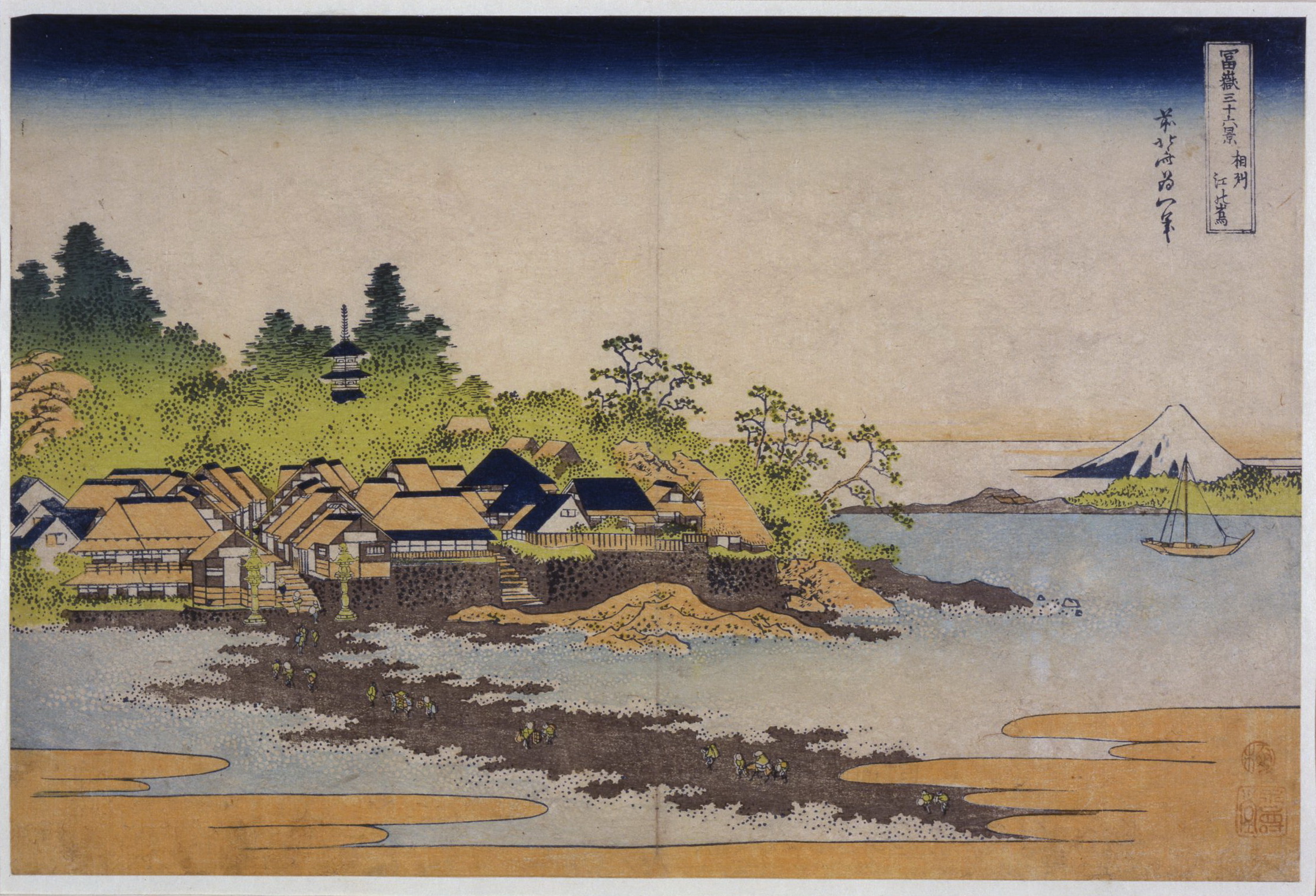
Katsushika Hokusai. Enoshima in Sagami Province, from the series Thirty-six Views of Mount Fuji
Katsushika Hokusai. Enoshima in Sagami Province, from the series Thirty-six Views of Mount Fuji
Katsushika Hokusai. Enoshima in Sagami Province, from the series Thirty-six Views of Mount Fuji
Katsushika Hokusai. Enoshima in Sagami Province, from the series Thirty-six Views of Mount Fuji
Katsushika Hokusai. Enoshima in Sagami Province, from the series Thirty-six Views of Mount Fuji
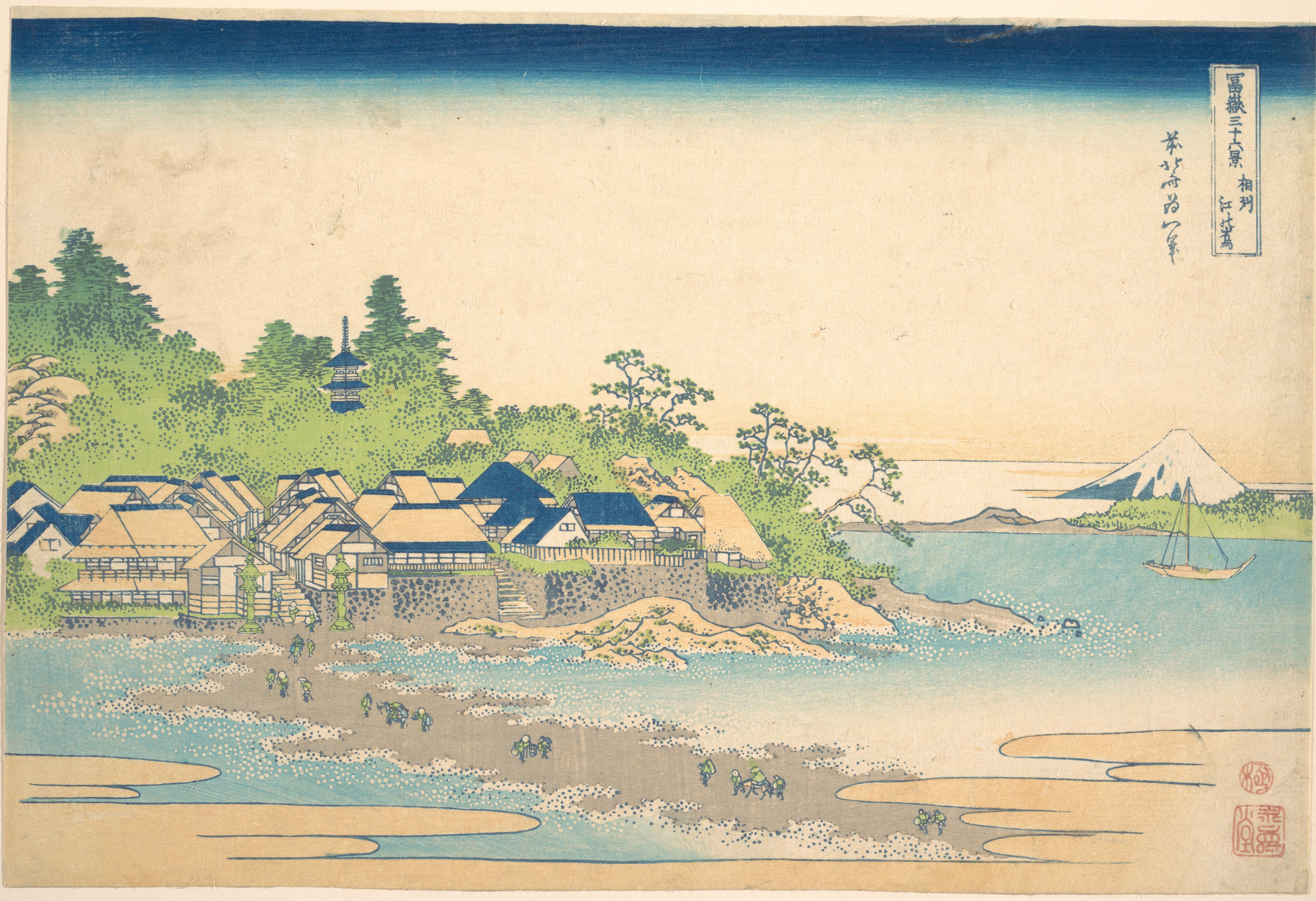
Katsushika Hokusai. Enoshima in Sagami Province, from the series Thirty-six Views of Mount Fuji
Все 46 гравюр серии «Тридцать шесть видов Фудзи» | Thirty-six Views of Mount Fuji | 富嶽三十六景 | Fugaku Sanjūrokkei
22 февраля 2023, 14:49
0 комментариев
|
Партнёры
|






Комментарии
Добавить комментарий